

· AFX Research, LLC
How Long a Recorded Document Keeps Working Against the Land
Filing something does not make it permanent. Most liens run on a clock set by state statute, and almost nothing gets filed when one of those clocks runs out.
Table of Contents
There is an assumption buried in the way most people read a title report, which is that anything appearing in it is currently in force. The document was recorded, the recording was never released, so the thing must still bind the property.
For deeds that is close enough to true. For a large share of everything else it is not. Liens, notices and filings carry durations, those durations are set separately by each state, and when one expires the usual consequence in the record is nothing at all.
What runs on a clock
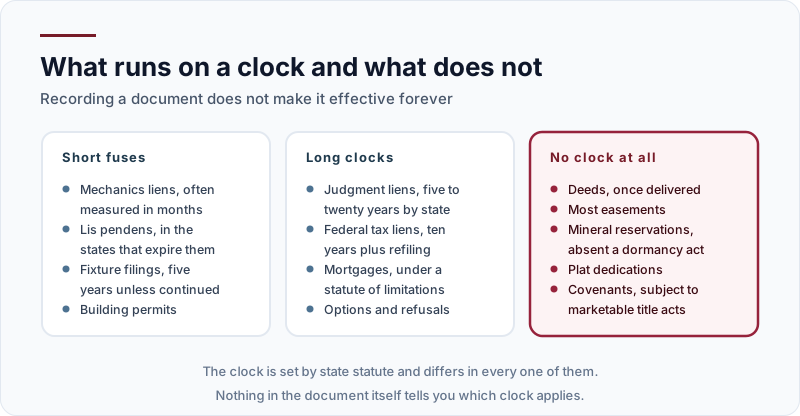
The short clocks are the ones that catch people out. A mechanics lien is typically measured in months from the last work performed, and in most states it dies unless a suit is filed to enforce it within that window. A UCC fixture filing lapses after five years unless a continuation is filed.
The long clocks are more forgiving and more consequential. A judgment lien runs somewhere between five and twenty years depending on the state, and in many of them it can be renewed before it expires. A federal tax lien is self-releasing ten years after assessment, subject to refiling and to a long list of events that extend the period. A mortgage is subject to a statute of limitations, and several states have ancient mortgage acts that clear old ones outright.
Some things carry no clock at all. A delivered deed does not expire. Most easements run with the land indefinitely. A mineral reservation lasts until a dormancy statute reaches it, which many states do not have.
What the record shows when the time runs out
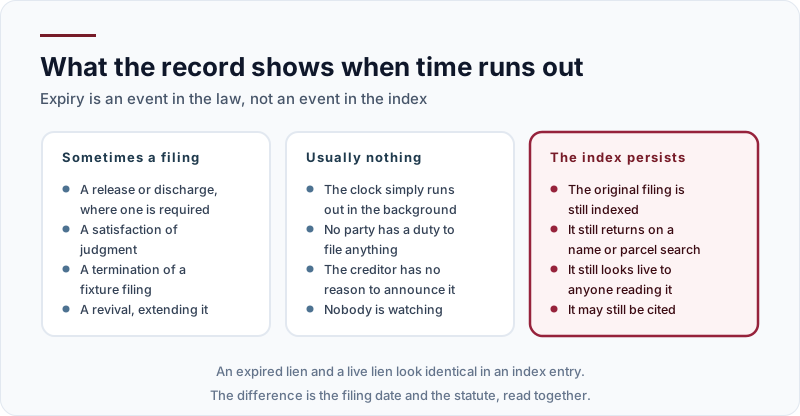
Occasionally a release gets filed. A satisfaction of judgment, a discharge, a termination statement on a fixture filing. Those are clean and they resolve the question.
More often nothing happens. The statutory period runs out quietly, no party has any duty to announce it, and the creditor has no incentive to file a document saying its lien is gone. The index entry stays exactly where it was.
So an expired lien and a live lien look the same. Same instrument type, same parties, same book and page. The only difference visible in the record is the date, and the date means nothing until it is read against the right statute, which varies by state in the same way why recording practice is local describes.
Why this is harder than it looks
Three things make the arithmetic unreliable for anyone doing it casually.
The clock often does not start at the recording date. A judgment lien may run from entry of judgment rather than from the date it was docketed against land in a particular county. A mechanics lien runs from the last furnishing of labor or material, a date that appears nowhere in the record.
Periods get tolled. A bankruptcy filing suspends enforcement and in many states suspends the running of the lien period with it. So does the debtor’s absence from the state, under statutes still on the books in a number of jurisdictions.
And revival exists. A judgment renewed in year nine of a ten year period is live again for another full term, and the renewal is a separate filing that may be indexed under a slightly different name than the original. Missing the renewal produces exactly the wrong answer with great confidence, and name variants are a recurring reason it gets missed, as why two searches can return different answers sets out.
How a search handles it
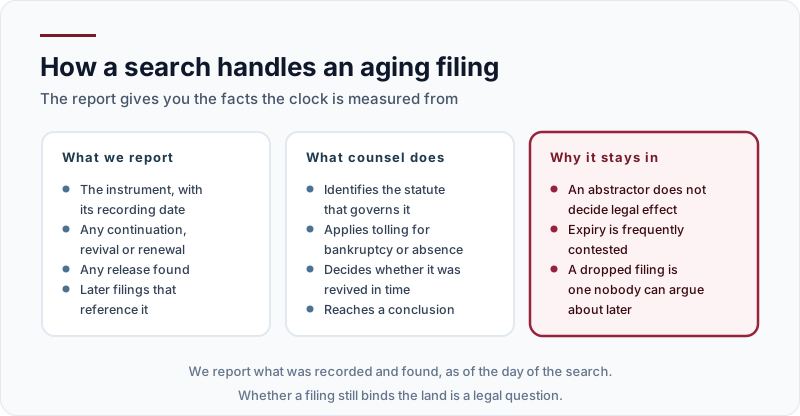
What we do is report the instrument with its dates, report any continuation or revival found, report any release found, and leave the legal conclusion where it belongs. An abstractor who quietly dropped a fifteen year old judgment because it looked stale would be making a legal determination in the dark, and it is the kind of determination that gets argued about afterward.
That is also why reports include things that turn out not to matter. An old filing that counsel clears in five minutes is a far better outcome than one nobody mentioned, which is the same reasoning behind what a title search is not.
The takeaway
Recording puts a document into the record permanently. It does not put the underlying right into force permanently. Most encumbrances run on a statutory clock, expiry generally produces no filing, and the index goes on returning the entry indefinitely.
Read any old filing as a date and a statute rather than as a fact, and get the statute from someone licensed in that state. If you want the filings pulled and dated accurately, tell us the parcel or see how the network covers a county.