

· AFX Research, LLC
What a Certified Abstractor Actually Does, and Does Not Do
The work behind a title search, the judgment it takes, what certification on a report actually asserts, and the questions an abstractor is the wrong person to ask.
Table of Contents
Most people encounter the word abstractor once, on a report, and never find out what the person signing it did. That vagueness causes real problems, because it leads to a search being asked for answers it was never built to give, and to a perfectly good report disappointing somebody who wanted a different document altogether.
The job is narrower than it sounds and harder than it looks.
The work itself
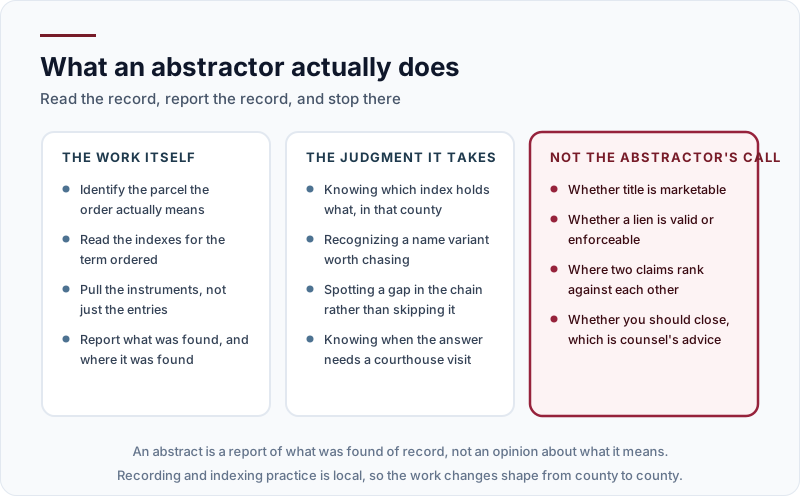
Four things, in order. Identify the parcel the order actually refers to, which is less obvious than it sounds when an address, a tax id and a legal description disagree. Read the relevant indexes for the period ordered. Pull the actual instruments rather than working from index entries. Report what was found and where it was found.
That is the whole task, and everything interesting about it lives inside step two.
Why it takes judgment rather than just time
An index is not a search engine. Records are organized differently in different counties, held in different offices, and indexed under conventions that changed several times over the past century. Knowing that deeds sit in one office and judgments in another, that a particular county’s grantor index has a gap across a fire year, or that a run of instruments was misfiled under a clerk’s abbreviation, is not information you can look up. It is accumulated local knowledge, which is why recording practice being local shapes this work more than anything else does.
Then there is the name problem. A judgment against Robert J. Smith will not surface on a search for Bob Smith, and deciding which variants are worth running is a judgment call made by a person who knows what tends to get indexed badly. The same applies to spotting a gap in a chain and chasing it rather than reporting around it.
The last piece of judgment is knowing when the answer is not online. A large share of American land records are not digitized past a certain year, and some are not digitized at all. Knowing which counties require somebody to physically walk into the courthouse is part of the work, and it is why AFX runs a network of abstractors by state rather than a database.
What certification means
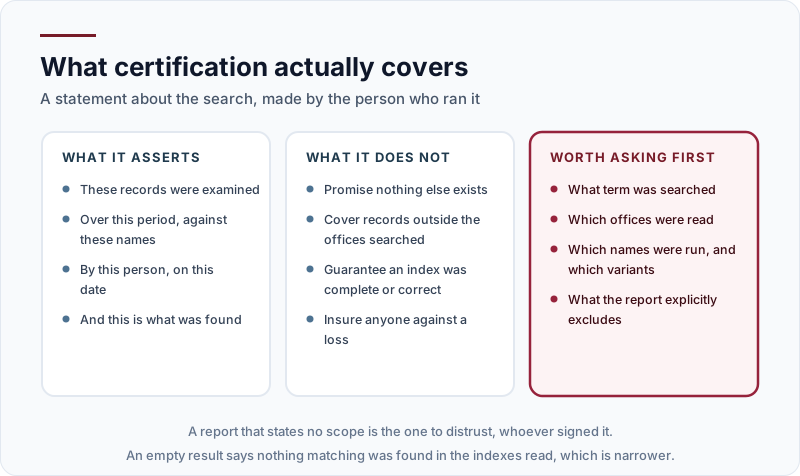
A certification is a statement about the search, made by the person who performed it. It asserts that these records were examined, over this period, against these names, by this person, on this date, and that this is what was found.
Read carefully, that is a narrow claim, and the narrowness is the point. It does not promise nothing else exists. It does not cover records held in offices that were not searched. It does not guarantee the county’s own index was complete or correct. And it is not insurance, because no risk has been accepted by anybody.
The practical value of certification is accountability. A named person with professional standing has said what they did, which means the scope is inspectable and the work is attributable. A report that states no scope at all is the one to distrust, whoever signed it.
Four people who answer different questions
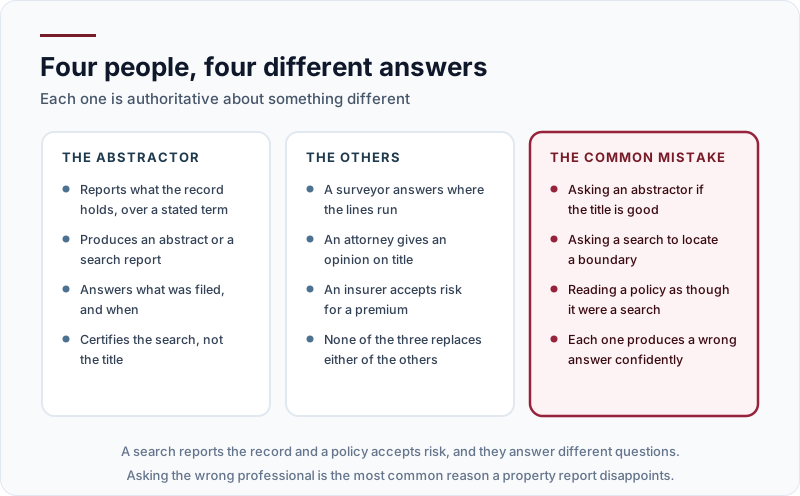
An abstractor reports what the record holds. A surveyor establishes where the boundaries physically run. An attorney gives an opinion on whether title is good and what the instruments mean. A title insurer accepts a defined risk in exchange for a premium.
None of those substitutes for another, and the most common source of frustration in this field is asking one of them for another’s answer. Asking an abstractor whether the title is marketable, or whether a lien is enforceable, or where two claims rank against each other, gets you either a refusal or a wrong answer delivered confidently. Those are legal conclusions. The sorting exercise is laid out in which professional answers which question.
The takeaway
An abstractor reads the record and reports it, with a certification that says exactly how far the reading went. That is a smaller claim than most people assume and a more demanding job than most people picture, and the discipline of not stepping past it is what makes the report worth relying on.
Find the property that runs your search, or tell us what you are trying to establish and we will point you at the right one before anything is ordered.