

· AFX Research, LLC
What It Means When a Title Search Turns Up Nothing at All
Why an empty result is a statement about the search rather than about the land, the interests that never reach an index, and how to use a clean report well.
Table of Contents
A report comes back with nothing on it. No liens, no judgments, no easements beyond the ordinary, no gaps. The natural reading is that the property is clean. The accurate reading is narrower, and the difference between those two readings is where most disappointment with property reports comes from.
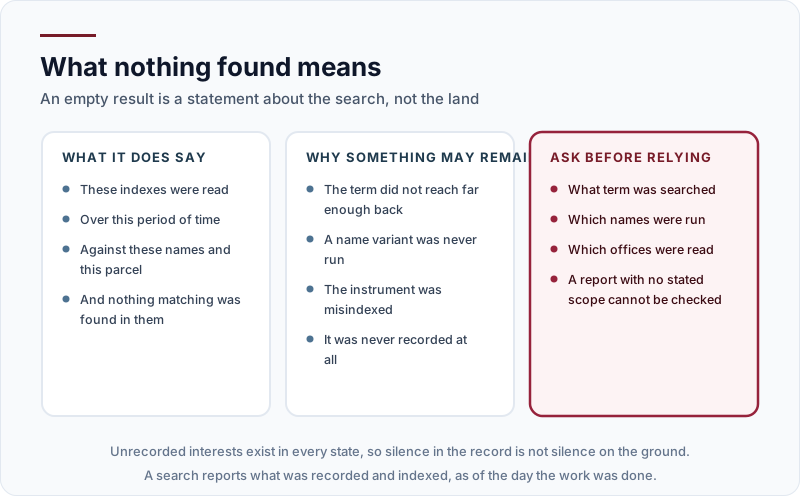
An empty result is a statement about the search. It says these indexes were read, over this period, against these names and this parcel, and nothing matching was found in them. Every one of those clauses is doing work.
Four ways something real can still be missing
The term did not reach far enough back, so an easement granted in 1961 sat outside the window. A name variant was never run, so a judgment indexed under a middle initial or a former name went unseen. The instrument was misindexed when it was recorded, which makes it legally effective and practically invisible, a problem covered in what happens when the public land record is simply wrong. Or it was never recorded at all.
That last category is larger than people expect, and it is the one no amount of diligence inside the recorder’s office can close.
Things that are never in the record
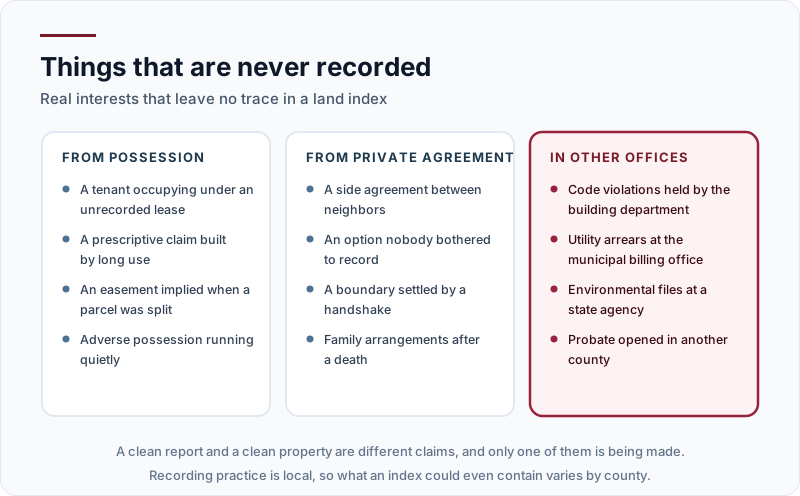
Rights that arise from possession leave no paper. A tenant occupying under an unrecorded lease. A prescriptive claim built by long use. An easement implied when a parcel was split decades ago. Adverse possession running quietly against a boundary nobody has questioned.
Then there are private agreements. A side arrangement between neighbors about a fence or a shared driveway. An option nobody bothered to record. A family understanding after a death that everyone honored and no one wrote down.
And a whole category lives in other offices entirely. Code violations at the building department, utility arrears at municipal billing, environmental files at a state agency, a probate opened in a different county. The recorder never sees any of it, which is the point made in what the recorder does not hold.
Using a clean report well
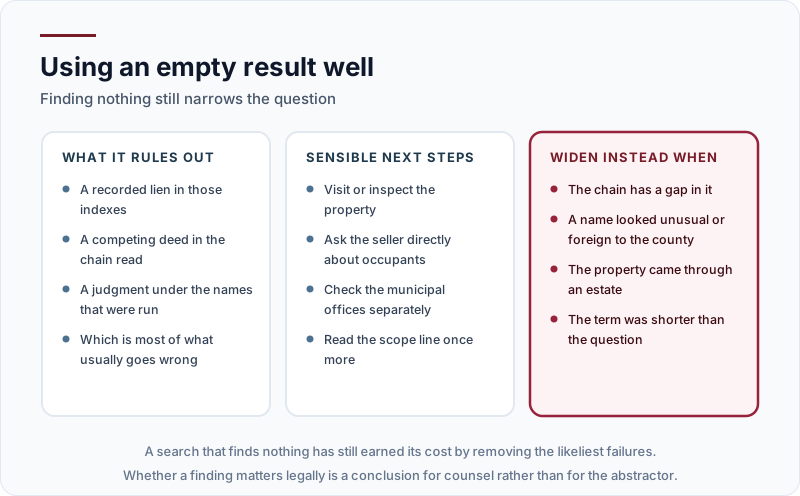
None of this makes an empty result worthless. It rules out a recorded lien in the indexes read, a competing deed in the chain examined, and a judgment under the names that were run, and those are most of what actually goes wrong on an ordinary transaction. A search that finds nothing has earned its cost by removing the likeliest failures, and knowing what remains is a different exercise from doubting what was done.
What it should prompt is a short list of cheap follow-ups. Look at the property, or have someone look. Ask the seller directly who is occupying it and on what terms. Check the municipal offices separately. And read the scope line once more, because it is the part that tells you what the finding is a finding about.
Sometimes the right response is to widen rather than to accept. A gap in the chain, a name that looks foreign to the county, a property that came through an estate, or a term plainly shorter than the question all argue for going further, which is the judgment described in how far back a search should go.
The report to distrust
Not the one that found nothing. The one that states a conclusion and says nothing about its own method. A report with no stated scope cannot be compared with another, cannot be reconciled when two disagree, and cannot be checked by anybody. That is not necessarily a wrong report. It is an unusable one.
The takeaway
Read the scope before the findings, treat an empty result as a fact about the indexes rather than about the land, and spend ten minutes on the things the record was never going to show. Recording practice is local, so what an index could even contain varies from one county to the next. Find the property that runs your search, or tell us what you are trying to establish and we will point you at the right one before anything is ordered.