

· AFX Research, LLC
What Makes One Title Search Take Longer Than the Next One
Why turnaround is mostly a fact about the county rather than the searcher, where the lost days actually go, and what a rush can and cannot buy you.
Table of Contents
Two searches ordered on the same day come back a week apart, and the reasonable assumption is that somebody was slower. Usually nobody was. Turnaround on a title search is driven mostly by facts about the county where the land sits, and only partly by anything the searcher or the client does.
Understanding which is which is useful, because two of the three categories are things you can actually affect.
The county is the biggest variable
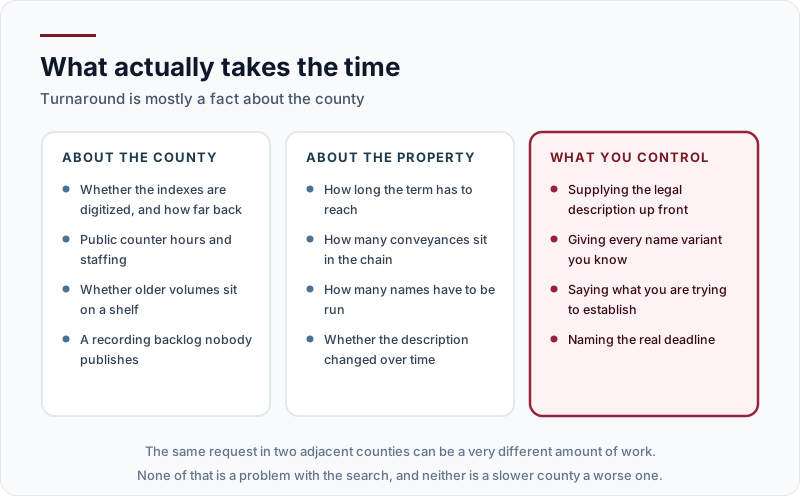
Whether the indexes are digitized, and how far back the digitization reaches, decides whether the work happens at a screen or at a counter. A county with scanned records running to 1950 can be worked remotely. One whose older volumes sit on a shelf needs a person physically present during public hours, and those hours are frequently shorter than an office day.
Then there is the recording backlog, which almost nobody publishes. An instrument filed last week may not be indexed yet, and no amount of diligence surfaces something the index does not yet contain. That variation is the practical face of why recording practice is local, and it means the same request in two adjacent counties can be a very different amount of work.
None of that makes a slow county a worse county. It makes it a different one.
The property matters too
How far the term has to reach. How many conveyances sit in the chain, because a parcel that has changed hands twice since 1980 is a shorter read than one that has been split, replatted, and sold eleven times. How many names have to be run. Whether the legal description changed along the way, which turns a straightforward read into a reconciliation exercise. Descriptions drift more than people assume, and the reasons are set out in how land gets identified in the record.
Where the lost days actually go
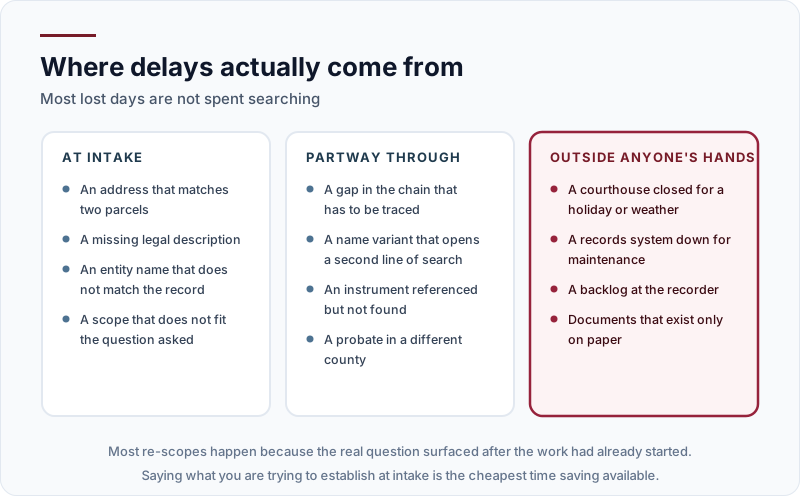
Rarely in the searching. Most of them go at intake, to an address that matches two parcels, a missing legal description, an entity name that does not match anything in the record, or a scope that does not fit the question being asked. Most re-scopes happen because the real question only surfaced after the work was underway, which is avoidable by saying what you are trying to establish at the start, as covered in what a search needs from you.
Others arrive partway through. A gap in the chain that has to be traced. A name variant that opens a second line of inquiry. An instrument referenced in one deed and not found where it should be. A probate opened in a different county.
And some sit outside everyone’s control. A courthouse closed for weather, a records system down for maintenance, documents that exist only on paper.
What a rush buys
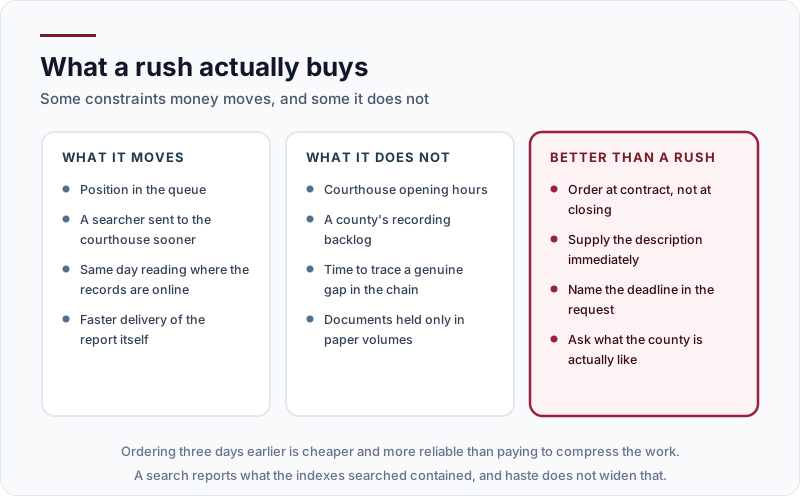
Position in the queue, a searcher dispatched sooner, same-day reading where records are online, and faster delivery of the finished report. Those are real and worth paying for when a date is genuinely at risk.
What it does not buy is courthouse opening hours, a county’s recording backlog, the time needed to trace a real gap, or the digitization of paper volumes. Paying more does not make a Tuesday-only public counter open on Monday, and it does not conjure an index entry for an instrument the clerk has not processed yet.
The better move is almost always ordering earlier. Three days at the front of a transaction costs nothing and is more reliable than compressing the work at the end.
The takeaway
Ask what the county is like before assuming a timetable, supply the legal description and every name variant at intake, say what you are trying to establish, and name the real deadline rather than a comfortable one. A search reports what the indexes searched contained as of the date of the work, and haste does not widen that. Find the property that runs your search, or tell us what you are trying to establish and we will point you at the right one before anything is ordered.