

· AFX Research, LLC
What the Land Record Says About a Building, and What It Does Not
A deed conveys ground and the structure comes along with it. Why a clean title report says almost nothing about the building, and which office holds that answer.
People order a title search expecting it to tell them something about the house. It very rarely does. The recording system is organized around land, the deed describes a parcel rather than a structure, and the building appears in the record only obliquely and only when something happened to it that somebody chose to file. This is one of the most common gaps between what a search is and what people expect, and it belongs with the others in what a title search is not.
The record is about land
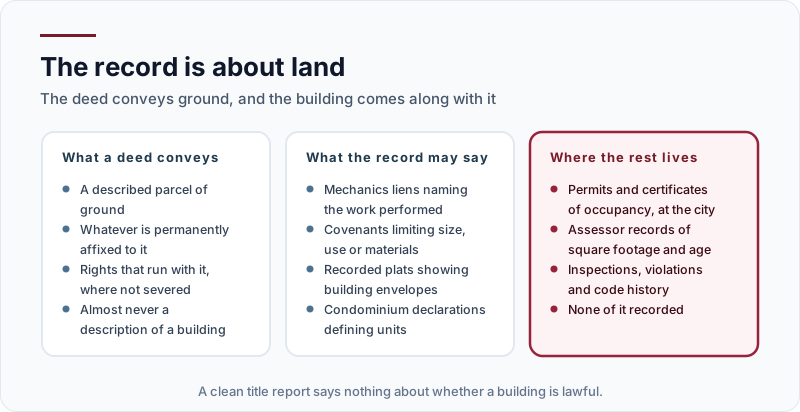
A deed conveys a described parcel of ground together with whatever is permanently affixed to it. That is the whole mechanism. The building is not itemized, not described and usually not mentioned, because it passes as part of the land rather than as a separate thing being sold.
The record does say a few things indirectly. Mechanics liens name the work performed, which is sometimes the only documentary trace that a renovation happened. Covenants may limit size, height, materials or use. A recorded plat can show building envelopes and setbacks. A condominium declaration defines units in three dimensions, which is the one place the record genuinely describes interior space — the reason how land is identified in the record works differently for condominiums.
Everything else about the structure lives somewhere else entirely. Permits and certificates of occupancy at the building department. Square footage, year built and condition class on the assessor’s roll. Inspection history, violations and complaints in files that were never recorded and never will be.
Where the two diverge
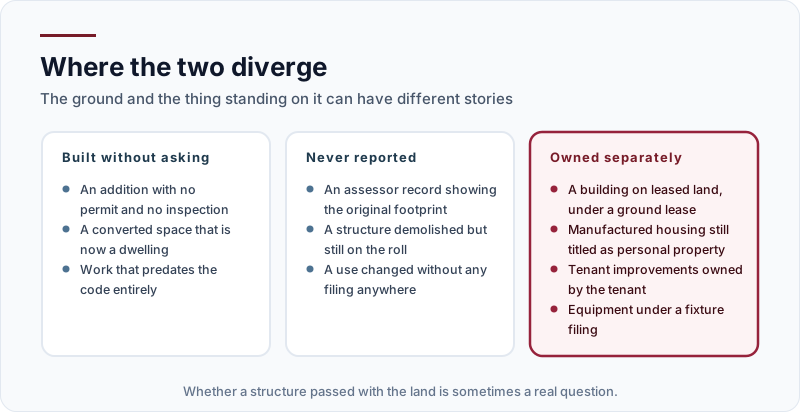
The gap between the paper and the building widens in three predictable ways.
Built without asking. An addition with no permit, a basement or garage converted into a dwelling, or work that simply predates the code. None of it is a title defect and all of it can be a serious problem on a sale or a claim.
Never reported. An assessor record still showing the original footprint. A structure demolished years ago and still on the roll. A use changed with no filing anywhere.
Owned separately. This is the one that matters for title work. A building on leased land under a ground lease belongs to the tenant rather than the landowner. Manufactured housing frequently remains titled as personal property and never became part of the real estate at all. Tenant improvements and equipment under a fixture filing are somebody else’s. In each case the structure standing on the land did not pass with the land, and the record is where you find out.
That last category is worth pausing on, because it is the one place where the land record does speak directly about a building and people miss it. A recorded ground lease, a memorandum of lease, an affidavit of affixation or a fixture filing each exist precisely to announce that the improvement and the ground have different owners. They are filed to give notice, they do give notice, and they are routinely skipped by anybody reading only the deed and the mortgage.
Asking the right office
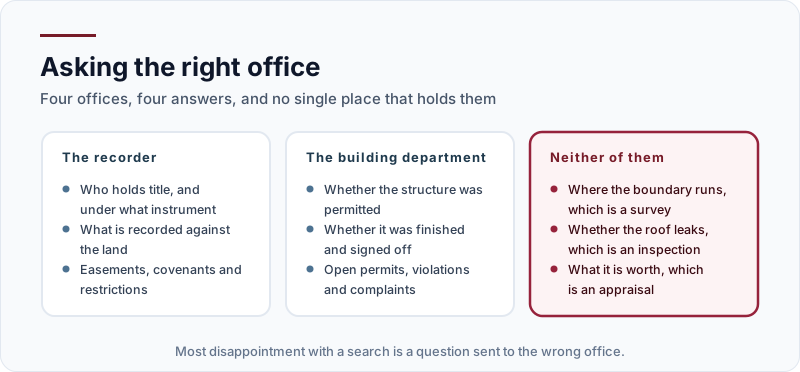
The recorder answers who holds title, under what instrument, and what is recorded against the land. That is a complete answer to a specific question, and it is the question a search is for.
The building department answers whether the structure was permitted, whether it was signed off, and what is open against it. That is a different office with different rules about who may ask.
And a third set of questions belongs to neither. Where the boundary physically runs is a survey. Whether the roof leaks is an inspection. What the place is worth is an appraisal. Nearly all disappointment with a title search traces back to a question that was sent to the wrong office, which is the routing problem set out in which professional answers which question.
The takeaway
A title search establishes who owns the ground and what is recorded against it. It does not establish that the building on that ground is lawful, complete, or even included. Ask the recorder about the land and the building department about the building, and the two answers together describe the property. Find the property that runs your search, or tell us what you are trying to establish and we will point you at the right one before anything is ordered.