

· AFX Research, LLC
When the Record and the Ground Disagree About a Property
A deed describes a boundary that has not moved since 1911 and a fence somebody built where it was convenient. Which one controls, and who is looking at which.
Every property exists twice. There is the one described in the recorded instruments, in words and distances that have not changed in a century, and there is the one with a fence, a driveway and a shed on it. Most of the time they correspond closely enough that nobody notices. When they do not, the gap is where disputes live, and it is a different kind of problem from a record that is simply wrong.
Two versions of one property
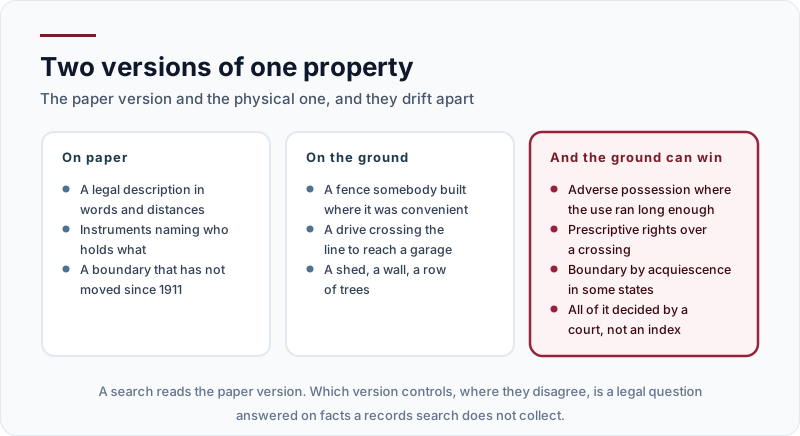
The paper version is precise and static. A legal description in metes and bounds or by reference to a plat, instruments naming who holds what, and a boundary fixed at whatever moment the description was written.
The physical version is neither. A fence goes up where the ground is easy to dig. A driveway curves across a line to reach a garage. Somebody plants a hedge, builds a wall, or adds a shed, and none of it was surveyed.
What makes this more than untidiness is that the ground can win. Adverse possession can transfer ownership where a use was open and continuous for long enough. Prescriptive rights can arise over a crossing nobody ever granted. Some states recognize boundary by acquiescence, where a line both owners treated as the line becomes the line. Every one of those is decided by a court on evidence, not found in an index.
Who looks at which one
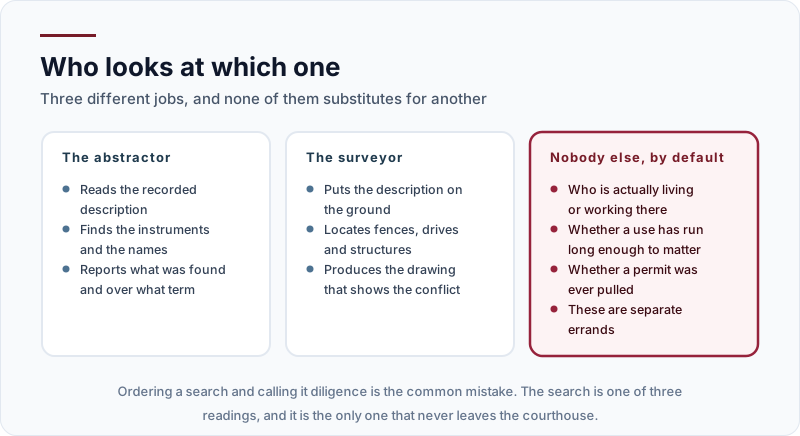
The division of labor here is clean and routinely misunderstood.
An abstractor reads the recorded description, finds the instruments and the names, and reports what was found over the term searched. That work never leaves the courthouse, which is the point of it.
A surveyor puts the description on the ground, locates the fences and structures, and produces the drawing that makes any conflict visible. Only the survey can tell you the fence is four feet inside the line, and no depth of reading in the index substitutes for it. That limit is part of what a title search is not.
And then a category nobody is assigned by default. Who is actually occupying the property, whether a use has run long enough to matter legally, and whether the addition ever had a permit are separate errands with separate people, which is the sorting problem behind which professional answers which question. Ordering a search and calling it diligence is the common mistake.
When they disagree
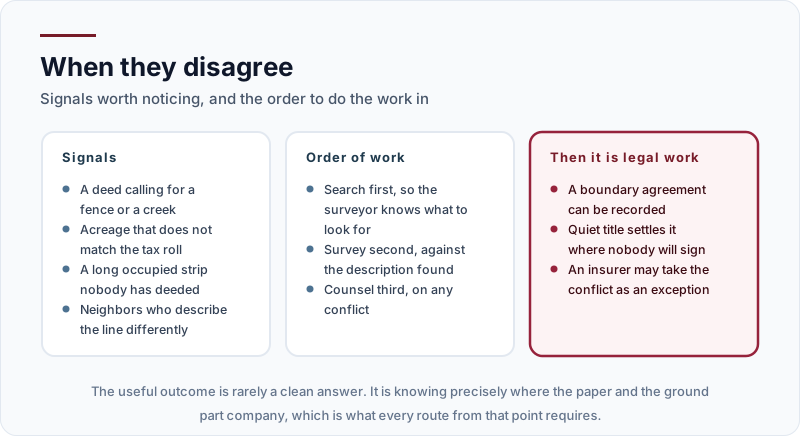
Some signals predict a conflict before anybody measures anything. A deed calling for a fence, a creek or a row of stones rather than a distance. Acreage in the deed that does not match the tax roll. A strip somebody has plainly been using that no instrument conveys. Neighbors who describe the line differently when asked separately.
The order of the work matters more than people expect. Search first, so the surveyor knows which description to put on the ground and which earlier conveyances might explain an odd line. Survey second. Take any conflict to counsel third.
Resolution is then legal work. A boundary line agreement signed by both owners can be recorded and settles it cheaply. Quiet title handles the case where somebody will not sign or cannot be found. A title insurer will generally take an unresolved conflict as an exception until it is dealt with.
Worth saying plainly to a client is that none of this means the search failed. A records search reports what was recorded and indexed over the term read. Possession, use and the passage of time are facts about the world rather than entries in a book, and they are collected by people who go and look. An abstractor who reported on them would be guessing.
The takeaway
The useful outcome of this exercise is rarely a clean answer. It is knowing exactly where the paper and the ground part company, because that boundary is what every route from there requires. Get the record read, get the ground measured against it, and treat any gap as a question for a lawyer rather than something a better search would have resolved. Find the property that runs your search, or tell us what you are trying to establish and we will point you at the right one before anything is ordered.