

· AFX Research, LLC
Which Title Search Do You Need? Start From the Question
How to pick the right records search: what the county record holds, why the term searched decides the answer, and the two conclusions a search never reaches.
Table of Contents
Most people who call us open with the property address. That is the right instinct and the wrong starting point. The address tells us where to look. It does not tell us what to look for, and the public record only answers questions that are put to it narrowly. That is the whole reason AFX runs a network of specialty and state sites instead of one general storefront. “A title search” is not one product, and picking the wrong one costs you a week.
Start from the question, not the product
Write down the sentence you actually need answered. Almost every matter reduces to one of a handful, and each one has a search built for it.
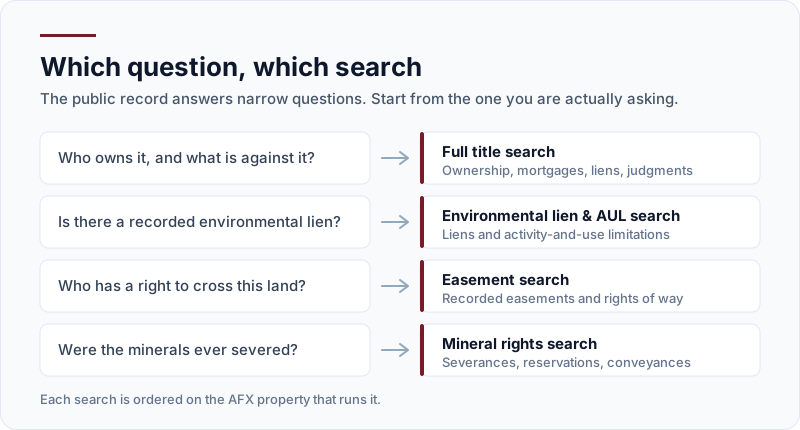
The pairing matters more than it looks. A full title search run to answer a mineral question will tell you who owns the surface and say nothing useful about a severance three owners back, and a lender who orders an easement search when they needed lien position will have paid for a careful answer to the wrong question. Match first, order second.
If your sentence is “who owns this and what is against it,” you want a full title search. If it is narrower than that, a narrower search is faster and cheaper, and it will be run by abstractors who look at that exact question every day. Our services page describes the four kinds of work in more detail, and the network directory says which property runs each one.
What the record actually holds
A search reads a filing office. That office holds a great deal, and it conspicuously does not hold some things people assume it does.
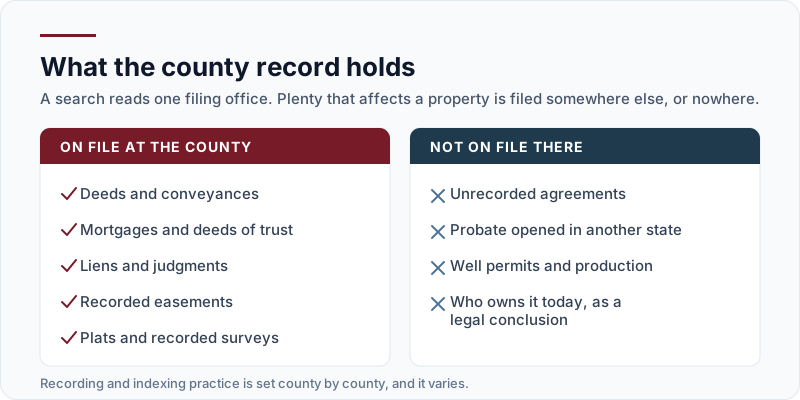
The right-hand column is where surprises live. An interest can pass by inheritance without anything being filed in the county where the land sits, because probate is often opened where the person lived instead. Well permits and production sit with state oil and gas regulators, not the recorder. None of that makes a search less useful. It just means the report tells you what has been recorded, which is a different claim from what is true. Read it that way and it is a precise instrument. Read it as a complete inventory of everything affecting the property and it will eventually mislead you.
The term you search sets the answer
Every search covers a period. A report that comes back clean means nothing was found in the years searched, and a document older than that window is invisible to it no matter how binding it still is.
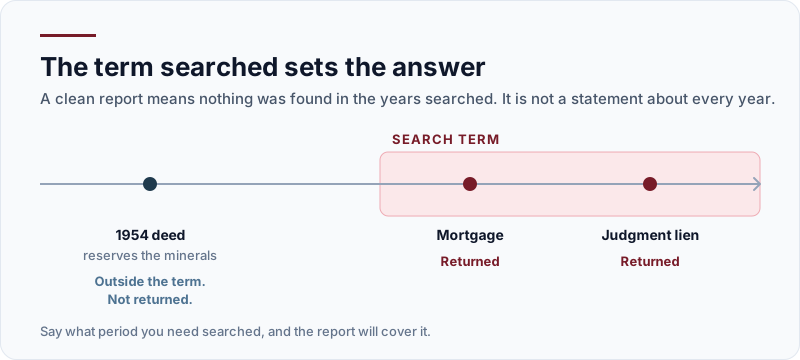
This is the single most common misunderstanding we correct. A 1954 deed reserving the minerals will not appear in a twenty-year search, and it does not stop mattering because it went unfound. If the period matters to your matter, say so when you order and the report will cover it.
Two conclusions a search does not reach
It is worth being blunt about the boundaries, because both of these get assumed.
A search is not title insurance. A report is research into what is on file. A policy is an indemnity contract issued by an underwriter. They are different products and one does not stand in for the other.
A search is not a legal opinion. Who holds title today is a conclusion, and it belongs to an attorney licensed in the state where the land sits. We give that attorney the record to reason from. We do not do the reasoning for them.
County practice is local
Recording and indexing are set county by county, and they genuinely vary — how names are indexed, how far back the grantor and grantee books run, what has been digitised and what still lives in a bound volume. A researcher who works a county regularly knows its quirks. That is why the network is split by state rather than run as one national queue, and it is the same reason AFX has kept the same abstractors on the same counties since 1995. If you are not sure which state property covers your parcel, the directory lists all fifty and says which one to use.
The takeaway
Name the question first, match it to a search, then set the period. Do those three things and the report you get back will answer what you actually asked. Find the property that runs your search, or tell us what you are trying to establish and we will point you at the right one before anything is ordered.