

· AFX Research, LLC
Who a Title Report Is Addressed To, and Why That Matters
A report is prepared for a named party on a stated scope and date. What that decides, why a report handed to you was written for somebody else, and what to ask.
Table of Contents
Title reports circulate. One gets ordered by a seller, forwarded to a buyer, copied to a lender, and read two years later by somebody pulling an old file. Every one of those readers is looking at a document that was scoped and dated for the first of them. Most of the time that is fine. When it is not fine, the failure looks exactly like a good report, which is the same problem as two searches that disagree legitimately.
Ordered by one, read by many
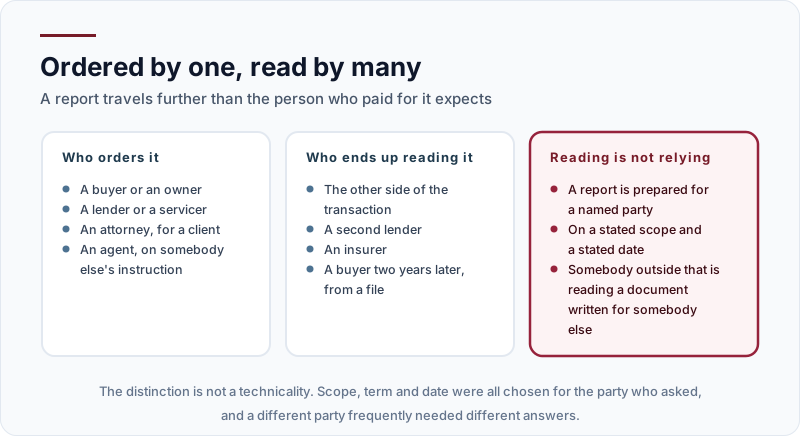
Somebody pays for the work. A buyer or an owner, a lender or a servicer, an attorney acting for a client, or an agent following an instruction. That party’s question is what the search was built to answer.
Then it travels. The other side of the transaction reads it. A second lender reads it. An insurer reads it. A buyer some years later finds it in a file and treats it as a description of the property.
Reading a report is not the same as being entitled to rely on it. That is not a technicality invented by lawyers. It reflects a practical fact, which is that the scope, the term and the date were all chosen for the party who asked, and a different party frequently needed different answers.
Why the name on it matters
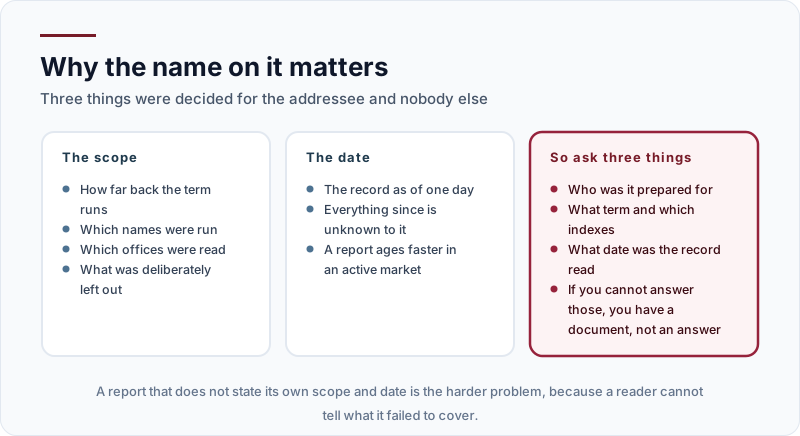
Three things were decided for the addressee and for nobody else.
The scope. How far back the term ran, which names were run, which offices were read, and what was deliberately left out because it did not matter to that party. A refinance search and an acquisition search on the same property are legitimately different documents, which is what sets the term in the first place.
The date. A report describes the record as of one day. Everything recorded since is unknown to it, and in an active market a report ages quickly.
So a later reader should be able to answer three questions before treating a report as an answer. Who was it prepared for, what term and which indexes did it cover, and on what date was the record read. A report that does not state those is the harder case, because you cannot tell what it failed to cover.
Getting this right
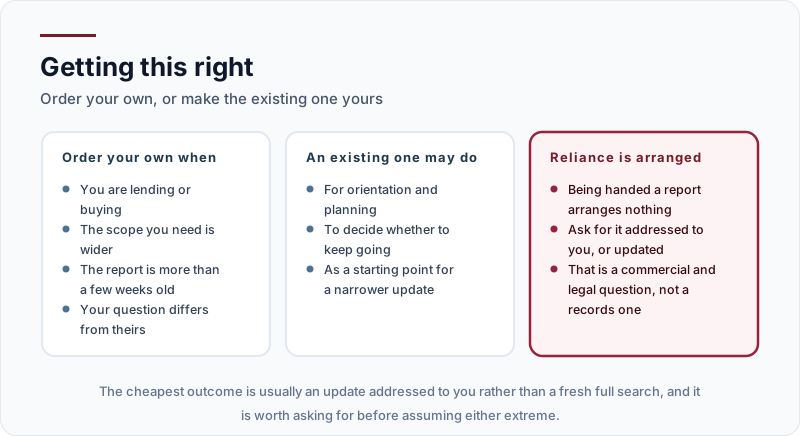
Order your own when you are the one lending or buying, when the scope you need is wider than the scope you were handed, when the report is more than a few weeks old, or when your question is simply a different question.
An existing report is often perfectly good for orientation. It tells you what kind of property you are dealing with, whether to keep going, and where to point a narrower update. Using it that way is sensible and cheap. It is also how most people first encounter a property, and there is nothing wrong with reading somebody else’s homework so long as you know whose it was.
What breaks is treating an old report as current. The gap between the date on a report and the day you read it is unsearched ground, and in that interval a lien can attach, a deed can record and a notice of default can be filed. That is the ordinary shape of what a search does not tell you.
What does not work is assuming that being handed a document arranges anything. Reliance is a commercial and legal matter rather than a records one, and the practical route is usually to ask for the report to be addressed to you or updated in your name. That is frequently cheaper than a fresh full search and it is worth asking about before assuming either extreme.
The takeaway
Treat a report you did not order as somebody else’s answer to somebody else’s question, which may well also answer yours. Check who it was for, what it covered and when, and if any of those do not fit, ask for an update rather than reading harder. A report is only as useful as the scope printed on it, and the scope is the part people skip. Find the property that runs your search, or tell us what you are trying to establish and we will point you at the right one before anything is ordered.