

· AFX Research, LLC
Why One Property Can Have More Than One Address on Record
Addresses are assigned for delivery, parcel numbers for taxation, and legal descriptions for ownership. Only one of the three is what the land records are organized around.
Table of Contents
Someone orders a search using the address on the letter in front of them, and the report comes back describing land that does not sound quite right. Nobody made an error. A property carries several different names, each assigned by a different office for a different purpose, and they do not all change at the same time or point at the same thing. Sorting that out is the first step in how land is identified in the record, and it is where more searches go sideways than anywhere else.
Four names for one piece of ground
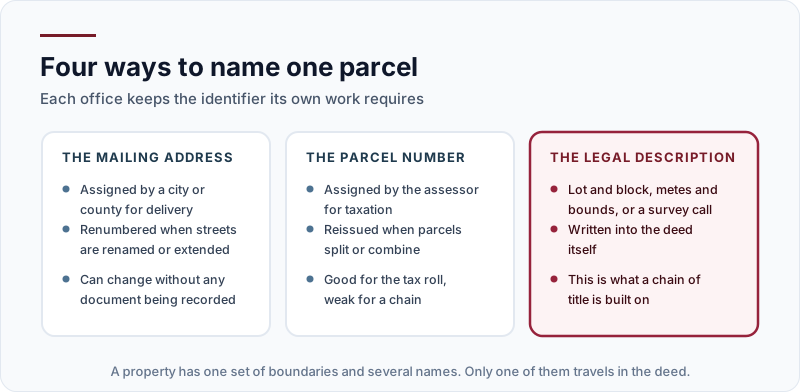
The mailing address exists so that mail and emergency services can find a door. A city or county assigns it, and it can be changed by renaming a street or renumbering a route without anybody recording a document.
The assessor’s parcel number exists so that a tax bill can be sent. It is excellent for looking up the roll and much weaker as a way to follow ownership, because these numbers get reissued when parcels split or combine.
The legal description is the one the land records are built on. Lot and block from a recorded plat, metes and bounds, or a call into a public land survey, written into the deed itself and carried forward through every conveyance. When a searcher runs a chain of title, that description is the thread being followed. The address is only a way to find the thread.
How a property picks up a second address
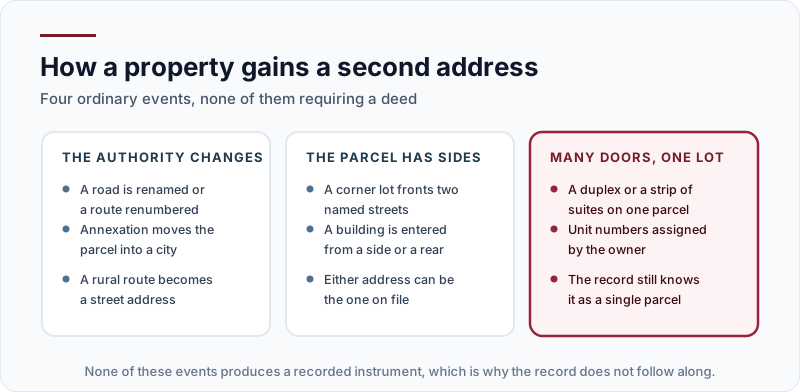
The most common cause is that the assigning authority changed something. A road gets renamed, a rural route is converted to a street address, or annexation moves a parcel from county numbering into city numbering. The old address does not disappear from every database at once, so two versions circulate for years.
Corner lots create a second address simply by having two frontages. A building entered from the side street may be listed one way by the post office and another way by the assessor, and both are correct.
And a single parcel can carry many doors. A duplex, a row of suites, or a house with a converted unit produces unit numbers assigned by an owner rather than by any public office. The record still knows the whole thing as one parcel, which is why a search on one unit number can return the entire property, or nothing at all. None of these events generates a recorded instrument, which is precisely why the land records do not follow along.
What a searcher actually does with the address you give
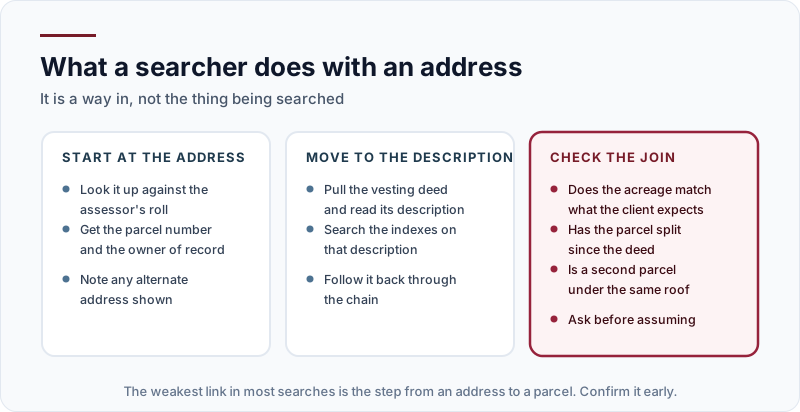
The address is the way in. A searcher takes it to the assessor’s roll, gets a parcel number and an owner of record, notes any alternate address shown, and then pulls the vesting deed to read the legal description. From that point the search runs on the description, not on the address.
The step worth pausing on is the join between the two. Does the acreage look like what the client described? Has the parcel been split or merged since the deed was written? Is there a second parcel sitting under the same roof, which happens more often than people expect on older commercial buildings? An abstractor who asks those questions early avoids searching the wrong land carefully, and it connects directly to what a search needs from you at the point of ordering.
Practice here is local, as it is with most of this work. How addresses are assigned, how quickly the assessor’s roll reflects a change, and how parcels are numbered all differ from one county to the next, which is part of why recording practice is local.
The takeaway
Give whoever is searching more than the address. The parcel number, the owner’s name as you understand it, and any prior address you have seen all help confirm that the search lands on the right ground before the real work starts. Find the property that runs your search, or tell us what you are trying to establish and we will point you at the right one before anything is ordered.