

· AFX Research, LLC
How State Law Changes the Answer to the Same Title Search
The county keeps the records and the state decides what they mean. Recording acts, who has to sign, and the time limits that quietly end old claims.
Table of Contents
Two chains of title can read the same way and settle differently, and the reason usually has nothing to do with the searching. Recording practice is local, which explains why one county is harder to read than the next, but it does not explain why an identical instrument carries different weight in Ohio than in Texas. That part is set a level up.
Three layers, not one
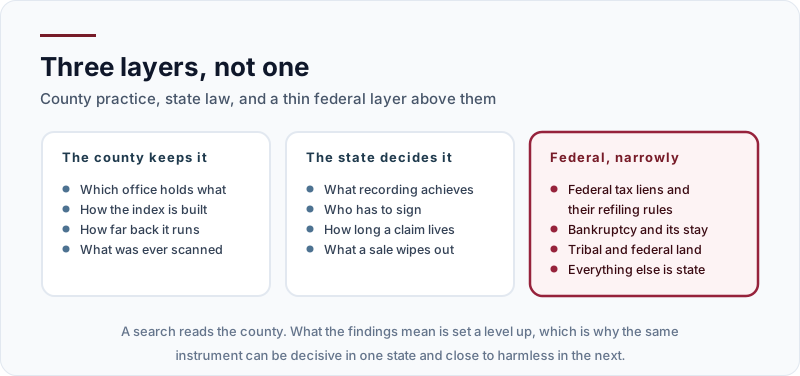
The county keeps the records. Which office holds what, how the index is built, how far back the series runs, what was ever scanned. All of that is county business and all of it shapes how hard a search is.
The state decides what the records mean. What recording actually achieves, who has to sign a conveyance for it to be good, how long a claim survives, and what a foreclosure or tax sale wipes out are questions of state law. None of them are visible in an index entry.
Above both sits a thin federal layer that matters more than its size suggests. Federal tax liens and their refiling rules, the bankruptcy stay, and land held in federal or tribal trust all override the state answer. Outside those, this is a state law subject nearly everywhere you look.
Where the states part company
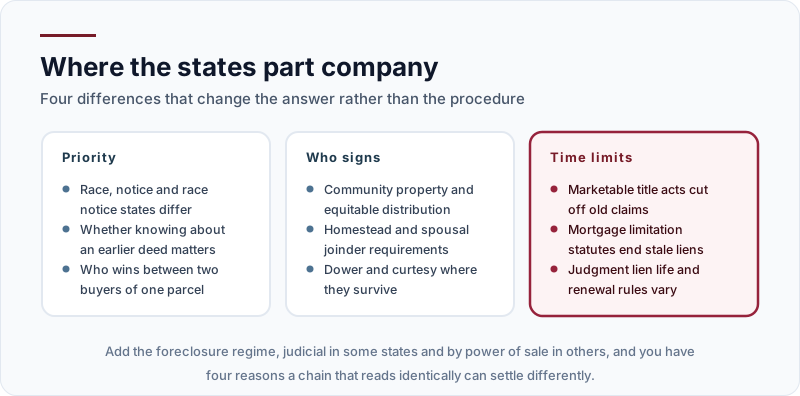
Priority is the first fault line. States divide roughly into race, notice and race-notice systems, and the difference decides who wins between two people claiming the same parcel. Whether it matters that the later buyer knew about an earlier unrecorded deed is exactly the kind of question that has opposite answers a few hundred miles apart.
Who has to sign is the second. Community property states treat a marital acquisition differently from equitable distribution states. Homestead and spousal joinder requirements mean a deed signed by the record owner alone can be defective in one state and perfectly good in another. Dower and curtesy still survive in a handful of places.
Time limits are the third, and they are the quietest. Marketable title acts in about half the states extinguish interests older than a root of title. Mortgage limitation statutes eventually kill an ancient unreleased lien. Judgment liens have a statutory life and a renewal procedure, and both vary. An instrument that looks alarming in the index may already be dead, or may not be, and the index will not say.
Add the foreclosure regime, judicial in some states and by power of sale in others, and you have four reasons a chain that reads identically can end up in different places.
Reading a report across a state line
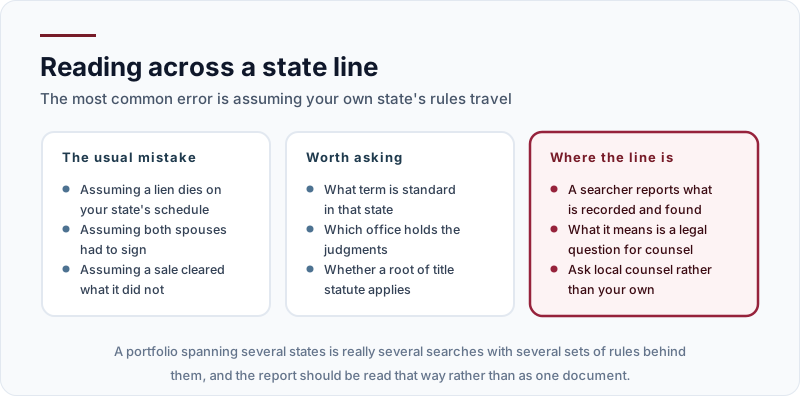
The common error is not misreading the report. It is applying the rules of the state you work in most. Assuming a judgment lien dies on your own state’s schedule, assuming both spouses had to sign, assuming a sale cleared what it would have cleared at home. Each of those is a reasonable habit and each is wrong somewhere.
A few questions defuse most of it. What term is standard in that state, and why. Which office holds the judgments, since that split is itself a state law artifact. Whether a root of title statute applies, because it changes how far back is worth reading. Those answers are the sort of thing local knowledge in a county is actually for.
And then the boundary, which does not move. A searcher reports what was recorded and found in the offices read, over the term read. What it means legally belongs to counsel, and on a multi-state file it belongs to counsel licensed where the land is rather than where the client is.
The takeaway
Treat the state as part of the scope rather than as a detail of the address. A portfolio spanning six states is six searches with six sets of rules behind them, and reading the reports as one document is how people get surprised. The network is split by state for this reason rather than for convenience. Ask what the local standard term is, ask which office holds what, and put the legal questions in front of somebody admitted there. Find the property that runs your search, or tell us what you are trying to establish and we will point you at the right one before anything is ordered.