

· AFX Research, LLC
Searching Property Records Online, and Where It Stops Short
What a county portal is actually matching, the difference between an index entry and the instrument, why coverage stops at a start year, and when a lookup is enough.
Table of Contents
Most filing offices now put something on the internet, and that is a real improvement over a drive to the courthouse. It also produces a confident kind of mistake, because what comes back on the screen looks finished. You type a name, you get rows, and nothing on the page tells you what was left out of them.
Knowing what you are looking at is most of the skill.
Four things people call the record
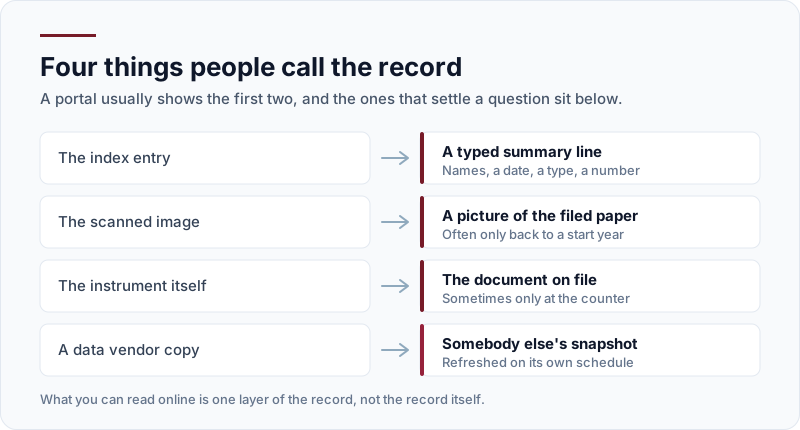
The word record gets used for four different objects, and they are not interchangeable.
The index entry is a line somebody keyed in, holding names, a date, a document type, and a number pointing at where the image sits. The image is a scan of the paper that was filed. The instrument is the document itself, which in some offices is still the only complete version, particularly for older filings and for exhibits that did not scan cleanly. A data vendor copy is a third party’s snapshot of the first two, refreshed on whatever schedule that company keeps.
Free county portals usually hand you the first and sometimes the second. Subscription sites usually hand you the fourth while leaving the impression it is the first.
What a portal is actually matching
When you search a name, you are not searching documents. You are searching the typed index, and in most systems you are matching it fairly literally.
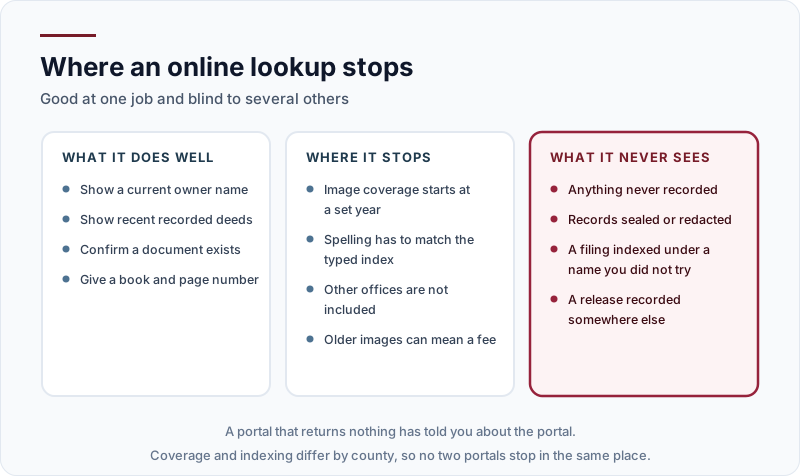
That matters more than it sounds. A judgment docketed against Robert J. Smith does not surface on a search for Bob Smith. A deed recorded under a maiden name does not surface under a married one. A clerk’s abbreviation, a transposed pair of letters, a middle initial on one filing and not the next, and the row is simply not returned. The portal has not misled you. It answered the question you typed.
The same applies on the parcel side. Some offices index by parcel number as well as by name and many do not, so the question you can even ask depends on the system in front of you.
Where the coverage line falls
Every online collection starts somewhere. One office may have images back to 1988, an index back to 1965, and paper before that, because the line was set by when that office digitized and what it could afford. Some portals state their coverage plainly. Many do not, and a search that returns nothing from 1979 looks exactly like a search that found nothing in 1979.
That line moves at the county boundary, which is why recording practice is local rather than a national standard.
What is not there at all
Three categories never appear on a portal, however good it is. Interests that were never recorded, which covers a large share of what actually affects land. Records held by a different office, since a recorder’s portal shows a recorder’s holdings and not a court’s. And material sealed or redacted under rules that differ by state.
So an empty result on a portal is a statement about the portal. Reading a nothing-found result honestly means asking which collection was read, over what period, and under which spellings.
When looking it up yourself is enough
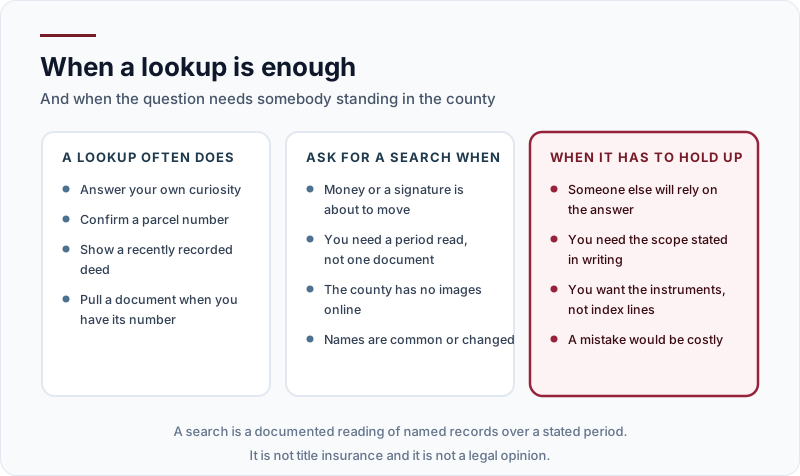
Often, and worth saying plainly. If you want your own parcel number, a recent sale down the street, or a copy of a deed whose document number you already have, a portal is the right tool and you do not need anybody else.
The line to watch is who relies on the answer. Once money or a signature depends on it, you need a period read rather than a document found, the names run in their variants, the instruments pulled rather than the index lines trusted, and the scope of all that stated in writing. That is a different piece of work, and it is what a certified search is. It is also why AFX has spent thirty years putting people into counties rather than building another database.
The takeaway
An online portal is a window onto one layer of one office’s holdings, beginning in whatever year that office started scanning, matched against exactly what you typed. That is genuinely useful, and it is not the record. When the answer has to hold up for somebody else, the question stops being what you managed to find and becomes what was read, how far back, and under which names.
Find the property that runs your search, or tell us what you are trying to establish and we will point you at the right one before anything is ordered.