

· AFX Research, LLC
What a Certified Copy of a Recorded Document Actually Proves
A clerk certifies that a copy matches the file, on a stated date, and nothing else. What the attestation covers, what it leaves alone, and when a plain copy will do.
Table of Contents
People ask for certified copies without always knowing what the certification adds. The intuition is that certified means verified, and that a certified deed has been checked by somebody. It has not. The attestation on the last page makes a narrow and carefully worded claim, and knowing where that claim stops is part of understanding how a document becomes a public record in the first place.
Three kinds of copy
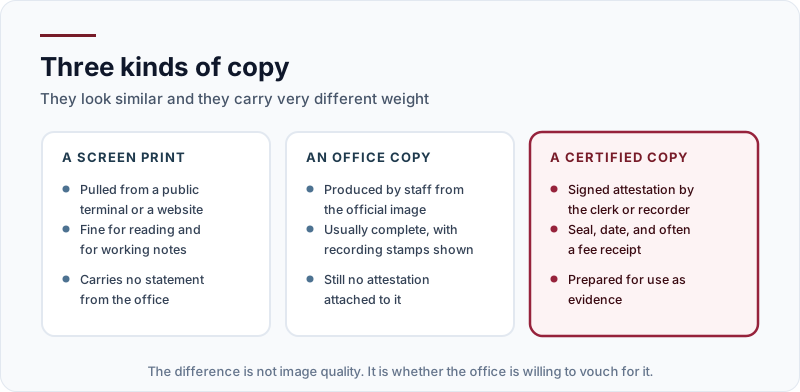
A screen print is the loosest. Somebody pulls the image from a public terminal or an online index and prints it. It is perfectly good for reading and for working notes, and it carries no statement from the office at all.
An office copy is produced by staff from the official image. It is usually complete, it shows the recording stamps, and it is what most people receive when they request a document by mail. Still no attestation.
A certified copy adds the office’s own word. A clerk or recorder signs a statement that the copy is a true copy of an instrument in the office’s custody, applies a seal, and dates it. That signature and seal are the entire difference. It is not a better scan. The underlying image is frequently the identical file the public terminal serves, printed on the same machine, with one extra page stapled to the back.
What the certification actually asserts
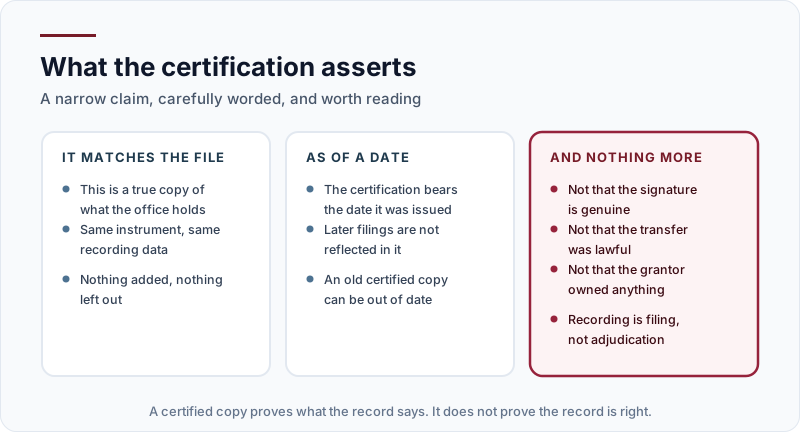
The first assertion is a match. This piece of paper corresponds to the instrument the office holds, same recording data, nothing added and nothing left out.
The second is a date, and it is the part people skip. The certification bears the day it was issued, and it reflects the file as of that day. A certified copy obtained three years ago says nothing about what has been recorded since, which is why an old one is not a substitute for a current search.
What it does not assert is everything people most want to know. It does not say the signature is genuine, that the grantor owned what they purported to convey, or that the transfer was lawful. Recording offices file documents, they do not adjudicate them, which is the same point made in what happens when the public record is wrong. A certified copy proves what the record says. Whether the record is right is a different question, and often a judicial one.
When the certified version earns its cost
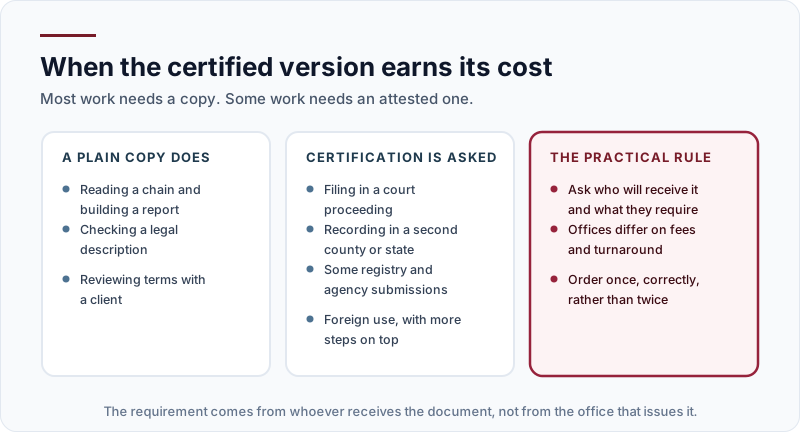
Most of the work does not need one. Reading a chain, checking a legal description against a survey, or reviewing terms with a client are all fine on a plain copy, and a report that attaches plain copies of every instrument found is the normal deliverable. Nobody certifies the forty documents behind a chain of title, because nothing in that reading turns on attestation.
Certification gets asked for when the document is going somewhere that requires evidence rather than information. A court filing, a recording in a second county or state, and certain registry or agency submissions typically call for it. Use outside the country usually adds further steps on top.
The practical rule is to ask the receiving party before ordering. Requirements come from whoever will accept the document, not from the office that issues it, and fees and turnaround differ from one county to the next in the way most things in this work do. That variation is why recording practice is local, and it is a good reason to have somebody who works in that courthouse handle the request rather than guessing at the form from a distance.
The takeaway
Treat certification as the office vouching for a copy, on a date, and nothing beyond that. Work from plain copies while you are reading and deciding, find out what the recipient actually requires before you pay for attestation, and remember that a certified copy of a bad deed is still a bad deed. Find the property that runs your search, or tell us what you are trying to establish and we will point you at the right one before anything is ordered.