

· AFX Research, LLC
What Happens When a County's Older Records Were Destroyed
Courthouse fires, floods and slow attrition have put a floor under the chain in hundreds of counties. How offices rebuilt, what they could not, and how a report should say so.
Table of Contents
Somewhere in the reading of an old chain, a search can simply run out of record. Not a missing instrument, not a name that will not resolve, but a series that stops because the volumes no longer exist. It happens more often than people expect, and it is a different kind of answer from what it means when a search finds nothing. Nothing found means the office was read and held no such filing. This means there was nothing left to read.
How a county loses its records
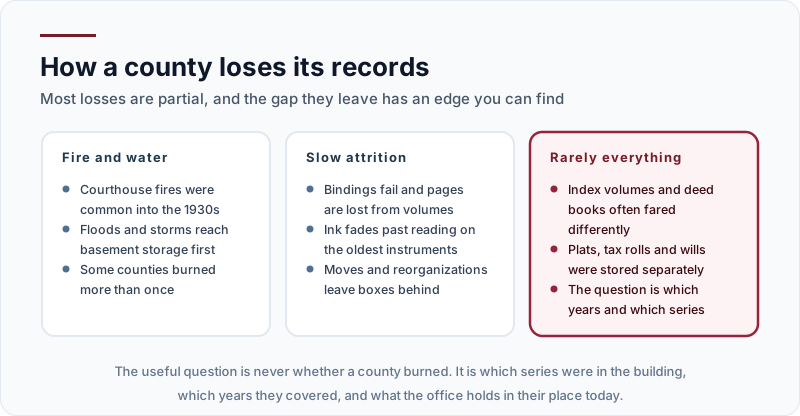
Fire is the famous cause and it earned the reputation. Wooden courthouses, coal heat and open flame made the nineteenth century hard on paper, and a fair number of counties burned twice. Water does quieter damage, because record storage tends to end up in basements, and a flood reaches those before it reaches anything else.
Then there is attrition, which nobody commemorates. Bindings fail and loose pages leave the volume. Ink on the oldest deeds fades past reading. Offices move, reorganize and consolidate, and each move is an opportunity for a box to not arrive.
What almost never happens is total loss. Deed books, index volumes, plat cabinets, tax rolls and probate files were usually kept in different rooms or different buildings, and they fared differently. So the useful question is never whether a county burned. It is which series were involved, which years they covered, and what the office now holds in their place.
What gets rebuilt, and how
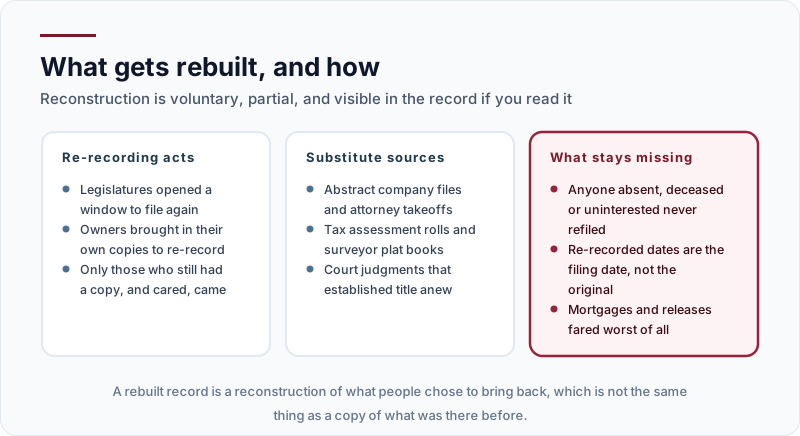
The standard response was legislative. After a significant loss a state would pass a re-recording act opening a window, often a year or two, in which owners could bring their own copies of deeds and mortgages to the office and file them again. Many did. The re-recorded instrument carries the original signing date in its text and the new filing date in its stamp, which is why an 1871 deed can show a recording date of 1885 and nothing is wrong.
Offices also gather substitutes. Abstract companies frequently held takeoffs of the destroyed books and their files became the working record in several well-known cases. Tax assessment rolls establish who was being billed for a parcel and when that changed. Surveyor plat books and court judgments fill in other corners.
The gaps are structural rather than random. Anybody who had lost their own copy, moved away, died, or simply did not bother never came in. Mortgages and releases fared worst, because a paid-off loan gave nobody a reason to refile. A rebuilt record is a reconstruction of what people chose to bring back, and that is a different thing from a copy of what was there before. It is one more reason recording practice is local in ways that change answers rather than just procedure.
What it does to a search
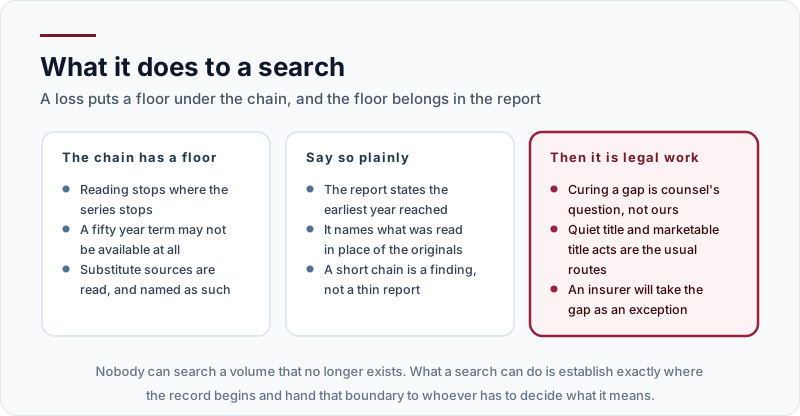
Practically, the loss puts a floor under the chain. An abstractor reads back until the series stops, reads whatever substitute the office maintains, and cannot go further. On a request for a fifty-year chain in a county whose deed books begin in 1907, the honest answer is the year the record actually begins, given before the work is ordered rather than discovered at delivery.
A report should state that plainly, name the earliest year reached, and name what was read in place of the originals. A short chain with its boundary stated is a finding. A short chain presented as though it were complete is the failure mode, and it is close cousin to the problem in what happens when the public record is wrong.
Closing the gap is then somebody else’s work. Marketable title acts, which in many states cut off claims older than a root of title, often make the question moot. Where they do not, quiet title is the usual route, and a title insurer will generally take the gap as an exception until it is resolved. Those are legal conclusions, and the abstractor’s job is to hand over an accurate boundary rather than an opinion about it.
The takeaway
A destroyed record is not a defect in the search and not a defect in the property. It is a fact about the county, it is knowable in advance, and it should shape the scope before anybody orders rather than surface as a surprise. Ask what years the office can actually produce, expect the answer to differ across the state line and sometimes across the county line, and treat a stated floor as the most useful thing a report can give you. Find the property that runs your search, or tell us what you are trying to establish and we will point you at the right one before anything is ordered.