

· AFX Research, LLC
Can You Order a Title Search on Property You Do Not Own
Land records are public because they only work if strangers can read them. Who may order a search, what it will show, and where the lawful line actually sits.
Table of Contents
The question comes up constantly and it is usually asked apologetically, as though wanting to read a public record about somebody else’s house were a slightly improper thing to want. It is not. The entire recording system exists so that people with no connection to a property can find out what has been filed against it, and a buyer who could not look would have no way of discovering the mortgage she is about to inherit. Understanding why follows directly from how a document becomes a public record.
Why the record is open at all
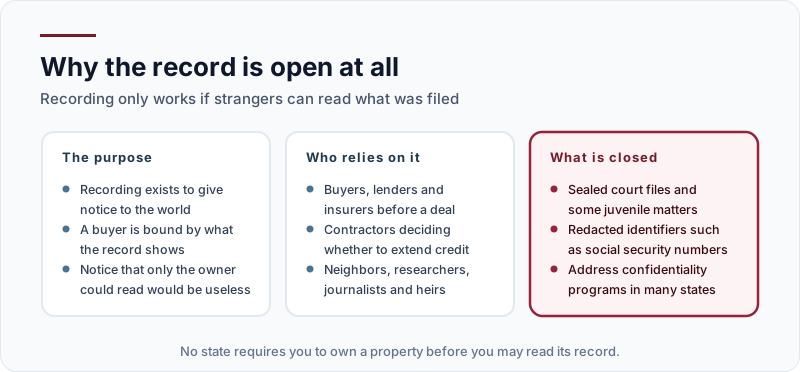
Recording gives notice to the world. That is the whole mechanism. A deed or a mortgage is recorded so that everyone who comes afterward is treated as knowing about it, and in most states a purchaser is bound by what the record shows whether or not she actually looked. A notice system that only the current owner could read would give notice to nobody and would collapse immediately.
So the people who rely on access are not intruders. They are buyers and lenders before a deal exists, insurers pricing a risk, contractors deciding whether to extend credit, heirs working out what a relative held, and neighbors checking a boundary.
What is closed is narrow and specific. Sealed court files, certain juvenile and adoption matters, redacted personal identifiers, and addresses protected under a state confidentiality program for people at risk. No state requires you to own a property before you may read its record, and none requires you to explain yourself to the clerk.
What access does not include
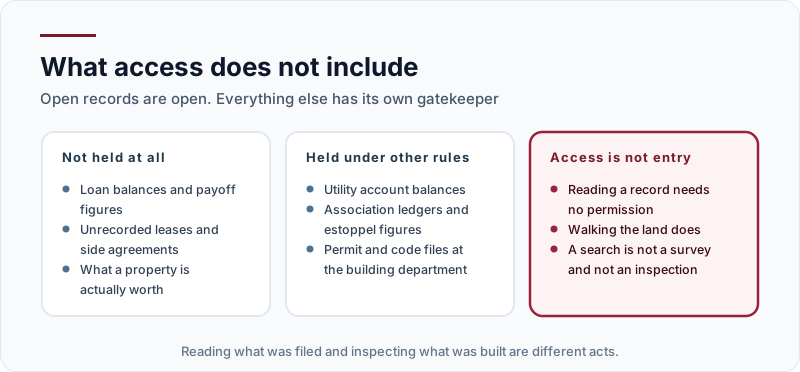
Open access is not universal access, because most of what people actually want is not in the recorder’s office at all. Loan balances and payoff figures are not there. Unrecorded leases and side agreements are not there. What the property is worth is not there. That is the territory of what the recorder does not hold.
Other records exist but answer to their own gatekeepers. Utility account balances, association ledgers and estoppel figures, building department permit files — each has its own rules about who may ask and what they must show.
And access is not entry. Reading a filed instrument needs no permission from anyone. Walking the land does. A records search is not a survey and not an inspection, and it never establishes anything about the physical condition of what is standing there.
Ordering on somebody else’s land
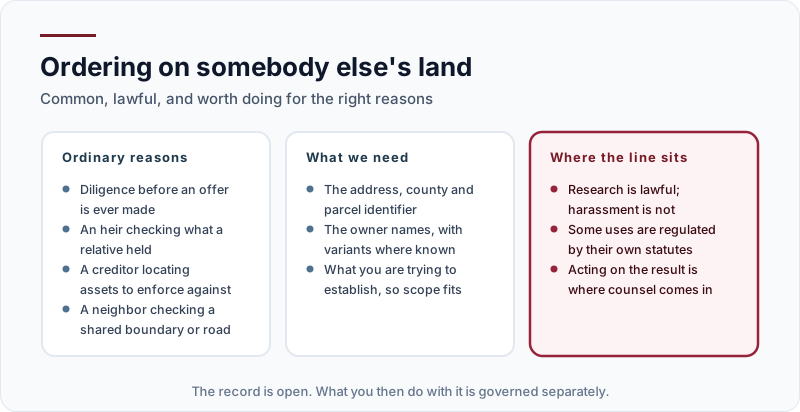
The ordinary reasons are the overwhelming majority. Diligence before an offer is made, which is the normal sequence rather than the exception. An heir establishing what was owned. A creditor locating assets to enforce a judgment against. A neighbor checking who holds the private road everyone uses.
What we need from you is the same in every case, and it is set out in what a search needs from you. The address, the county, a parcel identifier if there is one, the owner names with any variants, and a sentence about what you are trying to establish so the scope can be matched to it.
Where the line sits is worth stating plainly. Research is lawful and harassment is not, and a few uses of property data carry their own statutory regimes — tenant screening and credit decisions being the obvious ones. Those rules govern what you may do with an answer rather than whether you may have one, and they are questions for counsel rather than for the abstractor.
The takeaway
The public record is public because a private one would not work. You may order a search on any property, you do not have to justify the request, and the report will tell you what has been recorded and indexed rather than everything that is true about the place. Find the property that runs your search, or tell us what you are trying to establish and we will point you at the right scope before anything is ordered.