

· AFX Research, LLC
How a Correction Gets Into the Public Record, and What It Fixes
A recorder adds documents and never edits them, so a correction sits beside the error rather than replacing it. What that means for anybody reading the chain.
Table of Contents
Somebody notices that a deed recorded in 2019 spells the grantor’s name wrong, or omits the exhibit everyone assumed was attached, or describes Lot 7 where the parties plainly meant Lot 9. The instinct is to go and have it fixed. What actually happens is narrower and stranger than that, because a recording office does not edit anything. It accepts a second document, files it, and now the record contains both. This is the practical sequel to what happens when the public record is wrong.
What can be corrected
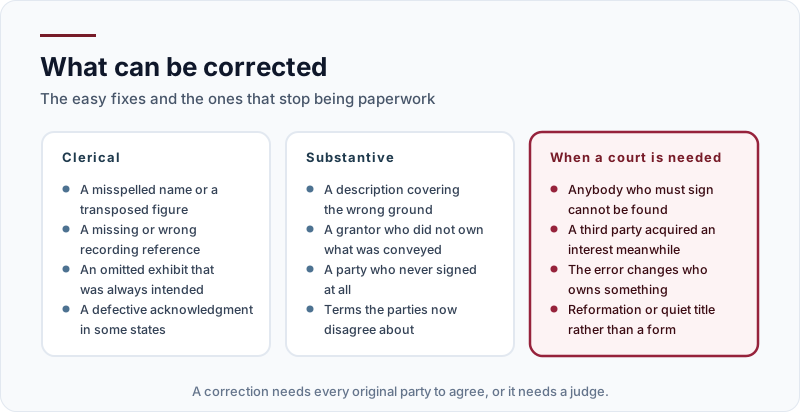
Clerical errors are straightforward. A misspelled name, a transposed figure, a missing recording reference, an omitted exhibit that was always intended to be there. In some states a defective acknowledgment falls here too.
Substantive problems do not. A description covering the wrong ground is not a typo, it is a conveyance of different land. A grantor who did not own what the deed purported to convey has a title problem rather than a drafting problem. A party who never signed cannot be added by correction. And where the parties now disagree about the terms, there is nothing to correct and something to litigate.
The dividing line is whether every original party will sign. A correction is a new instrument executed by the same people, so it works when everybody agrees and is available. When somebody cannot be found, when a third party acquired an interest in the meantime, or when the error changes who owns something, the route becomes reformation or quiet title and a judge rather than a form.
How the correction is made
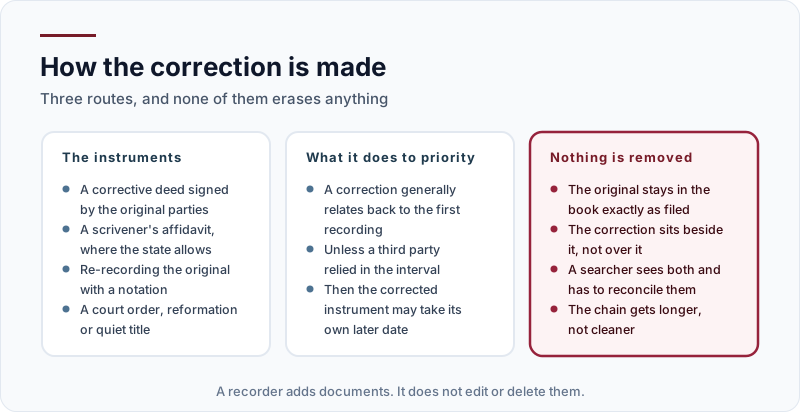
Three routes, varying by state. A corrective deed signed by the original parties. A scrivener’s affidavit, which some states permit for a narrow set of obvious errors and others do not recognize at all. Re-recording the original instrument with a notation describing the correction. And where none of those work, a court order.
Priority is the subtle part. A correction generally relates back to the original recording, which is the whole point of it. Where a third party acquired an interest in the interval and relied on the record as it stood, the corrected instrument may take its own later date instead, and the analysis runs through what happens when two recorded documents claim the same land.
Nothing is removed. The original stays in the book exactly as filed, the correction sits beside it rather than over it, and a future searcher sees both and has to reconcile them. The chain gets longer rather than cleaner.
Reading a corrected chain
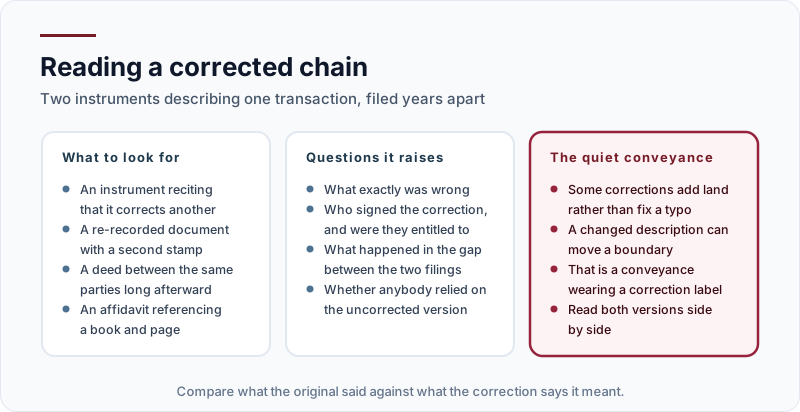
What to look for is an instrument reciting that it corrects another, a document bearing two recording stamps, a deed between the same parties filed years after the first, or an affidavit referencing a book and page.
What it raises is a set of questions. What exactly was wrong. Who signed the correction and whether they were entitled to. What happened in the gap between the two filings. Whether anybody relied on the uncorrected version in that window.
And one pattern deserves real suspicion. Some corrections add land rather than fix a typo. A changed description can move a boundary, which is a conveyance wearing a correction label, and the only way to see it is to read both versions side by side rather than accepting the later one as authoritative.
Why this matters more than it sounds
Because corrections accumulate, and a chain carrying several of them is harder to read than one carrying none, even though every individual correction made something better.
An abstractor working a long chain may encounter a 1974 deed, a 1976 re-recording of it, a 1981 affidavit referencing both, and a 1994 corrective deed between successors to the original parties. Each was filed in good faith. Together they describe one transaction four times, in four slightly different ways, and establishing what was actually conveyed means reading all four. That is the kind of work described in what a certified abstractor actually does, and it is why an index abstract is a poor substitute for the instruments.
The takeaway
Corrections are additive. The error stays in the book, the fix sits next to it, and the reader has to work out which one governs and from what date. When you find one in a chain, pull both instruments rather than the later one alone. Find the property that runs your search, or tell us what you are trying to establish and we will scope it before anything is ordered.