

· AFX Research, LLC
What Happens When Two Recorded Documents Claim the Same Land
Two deeds, one parcel, and both of them genuine. Which one prevails is set by a state statute rather than by fairness, and notice is usually the deciding fact.
Table of Contents
Two people hold deeds to the same ground and both bought in good faith. This is the situation the recording system was built to prevent and, more importantly, to resolve when prevention fails. The resolution is not a matter of who seems more deserving. It is set by a statute that each state chose a long time ago, and understanding which one applies is the difference between a solvable problem and an argument. It rests on the same foundation as why recording practice is local.
How two claims arise
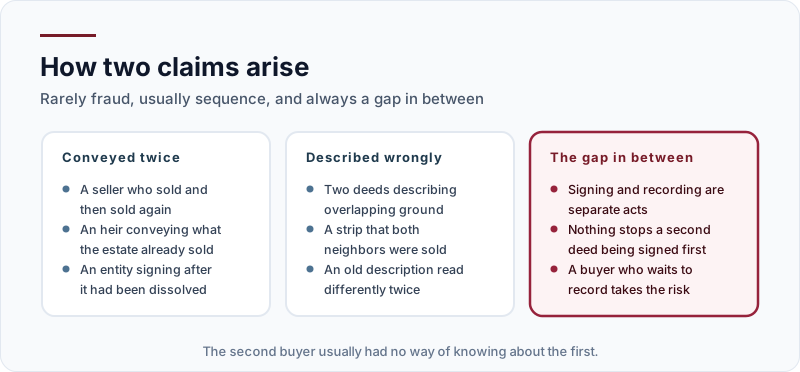
Fraud accounts for fewer of these than people assume. Most arise from sequence and from description.
A seller conveys, the buyer does not record promptly, and the seller conveys again. An heir signs a deed to property the estate had already sold. An entity executes a conveyance after it was administratively dissolved. Separately, two deeds can describe overlapping ground without anybody intending it, particularly where a strip along a boundary was sold twice over forty years, or where an old metes and bounds description is read differently by two different draftsmen.
Underneath all of it sits one structural fact. Signing and recording are separate acts, and nothing in the world prevents a second deed from being signed and recorded before the first one reaches the counter. A buyer who waits to record is carrying that risk personally, which is the practical reason an effective date matters so much.
What decides who wins
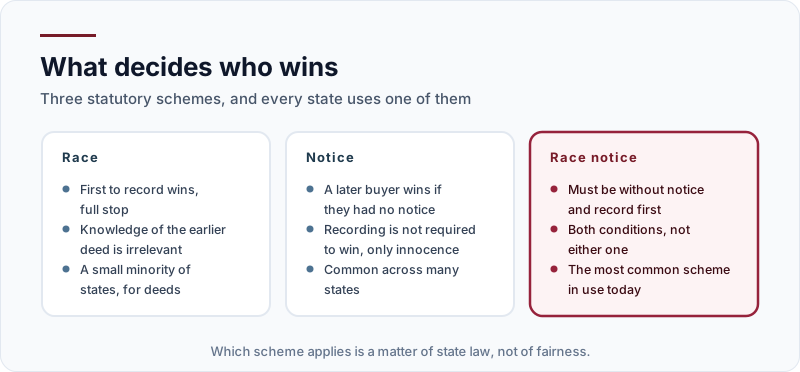
Every state uses one of three schemes, and the differences are stark.
Under a race statute, the first to record wins and knowledge of the earlier deed is irrelevant. A buyer who knew perfectly well about the prior sale and got to the courthouse first prevails. Very few states use this for deeds.
Under a notice statute, a later purchaser prevails if they took without notice of the earlier conveyance. Recording is not what wins; innocence is.
Under a race notice statute, the later purchaser must both take without notice and record first. Both conditions, not either one. This is the most common scheme in the country today.
Which one applies is a question of state law, and it is one of the places where how state law changes the same search has the sharpest consequences. The same facts produce opposite owners at a state line.
What counts as notice
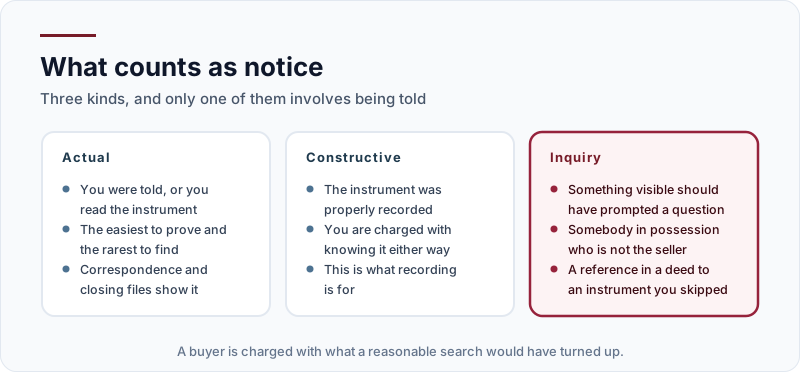
Notice is the word doing the work in two of the three schemes, and it has three forms.
Actual notice means you were told, or you read the instrument. Easy to describe, rare to prove.
Constructive notice means the instrument was properly recorded and indexed, so you are charged with knowing about it whether you looked or not. This is what recording is for, and it is why a document filed in the wrong county or indexed under a misspelled name may fail to give notice at all — the problem behind what happens when the public record is wrong.
Inquiry notice is the one that catches people. Something visible should have prompted a question. Somebody in possession who is not the seller. A reference in a recorded deed to an instrument nobody pulled. A purchaser is charged with what a reasonable inquiry would have revealed, not merely with what they happened to notice.
Why the losing party is not necessarily out of luck
The recording contest decides who owns the land. It does not decide who owes whom money, and those are separate questions with separate answers.
A purchaser who loses the parcel generally retains a claim against the seller on the covenants in the deed, since a warranty deed promises exactly this. Where a title policy was issued, the insurer’s obligation is triggered by the very outcome the policy was written for. And the seller who conveyed twice has usually committed something a court will take an interest in.
None of that makes losing the land pleasant, and it is worth stating because the reflex in these situations is to treat the recording contest as the whole case. It decides title. It is the beginning of the remedies discussion rather than the end of it.
The takeaway
Two honest claims to the same land are resolved by a statute rather than by equity, and in most states the winner is whoever both took innocently and recorded first. That makes prompt recording and a thorough search the two things actually within anybody’s control. Find the property that runs your search, or tell us what you are trying to establish and we will scope it before anything is ordered.