

· AFX Research, LLC
How Property Changes Hands Without Anybody Signing a Deed
Most land moves because somebody signed and delivered an instrument. A meaningful share of it moves without that, and those are the transfers a search has to reconstruct.
Table of Contents
The ordinary picture of a property transfer is a deed. A seller signs it, a buyer receives it, somebody walks it to the recorder, and the index moves from one name to the next. That picture covers most transactions and it is the one almost everybody has in mind.
It is not the only way land moves. Ownership also changes because a person died, because a court ordered it, or because a statute operated on its own. In those cases nothing was negotiated, nothing was signed by the person losing the property, and in a surprising number of them nothing was recorded either.
What moves land without a deed
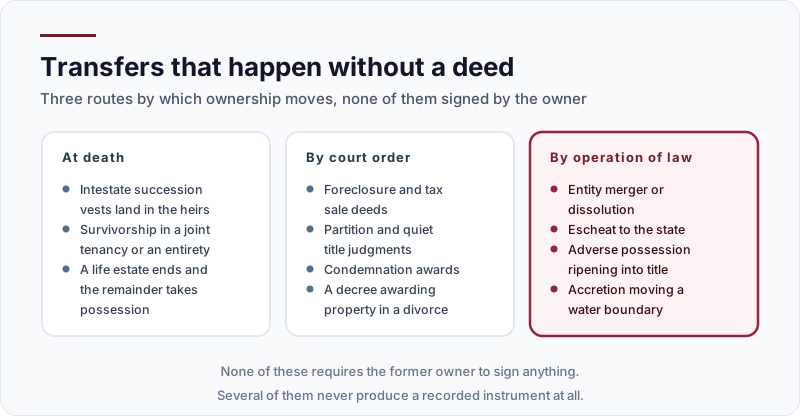
Death is the largest category. Where land was held in joint tenancy or by the entirety, the survivor owns the whole of it the instant the other owner dies, with no document required. Where there was a will, title passes under it. Where there was not, state intestacy law decides who takes, and it decides in a fixed order that has nothing to do with anyone’s intentions.
Courts account for most of the rest. A foreclosure produces a trustee or sheriff deed, a tax sale produces a tax deed, a partition suit ends in a judgment splitting or selling the land, and a condemnation moves title to a public body whether the owner agrees or not.
Then there is the residual category that surprises people. An entity merger carries the real estate with it automatically. A dissolved corporation’s property may vest in its shareholders. Adverse possession ripens into ownership when the statutory period runs. A river moving slowly against a bank moves the boundary with it.
Where each one leaves a trace
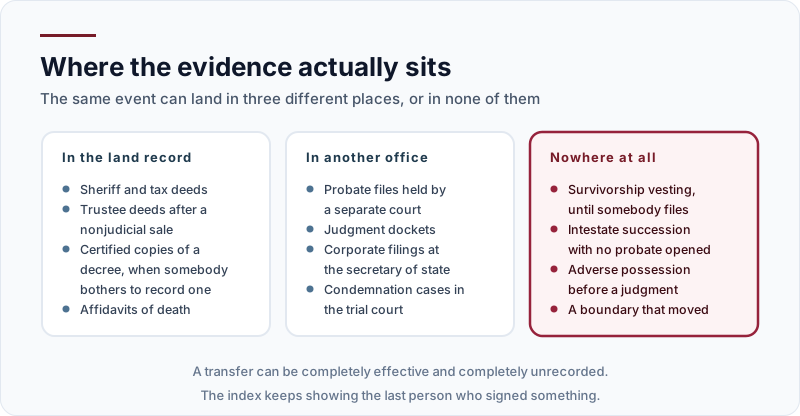
Some of these reach the land record cleanly. A sheriff deed gets recorded because the purchaser wants it recorded. A tax deed likewise.
Others sit somewhere else entirely. Probate is usually a separate court with separate files, and nothing obliges the family to record anything in the land record afterward. Entity history lives with the secretary of state. A condemnation judgment sits in the trial court docket.
And some leave no trace at all, which is the part worth sitting with. A surviving joint tenant owns the property outright and may never file a death certificate or an affidavit. The index keeps showing both names for as long as nobody has a reason to change it, which is frequently decades.
Why these are the transfers that get missed
An index is organized around filings. It is very good at telling you what was recorded and when, and it has no mechanism at all for recording something that nobody filed.
That means the failure is quiet. A search runs, the index returns the last recorded instrument, and the report is accurate about what was filed while being out of date about who owns the land. This is the same structural problem behind what happens when nobody can find the owner, and it is why the practice is to read a chain for what is absent as well as for what is present.
The tells are usually there. A long stretch with no activity on a parcel that clearly changed hands. Two names on the last deed and property taxes paid by one. A deed from heirs with no probate in the chain behind it. None of these is proof of anything, and all of them are reasons to look further.
What it means for a search
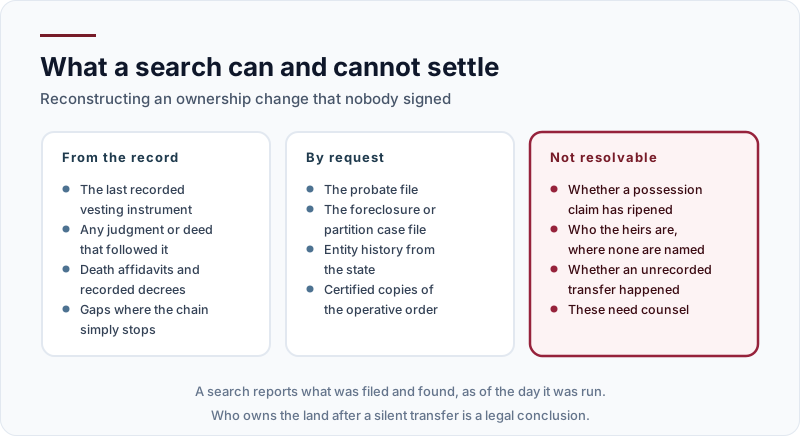
The practical approach is to treat the land record as the starting point rather than the whole answer, and to name the outside sources that would close the gap. Probate records, a court file, an entity history. Those can be pulled, and pulling them is ordinary work.
What cannot be resolved by searching is whether a possession claim has ripened, or who the lawful heirs of someone who died intestate actually are. Those are determinations, not findings, and they belong to a court or to counsel. The same boundary applies to what the recorder does not hold generally.
The takeaway
A deed is the usual instrument of transfer and it is not the only one. Death, a court order and a handful of statutes all move land without anyone signing anything, and several of them produce no filing at all. A search that reads only what was recorded will report the record correctly and describe the wrong owner, which is why why a search has an effective date matters as much as what the search found.
Tell us the parcel and what you already know about the chain and we will scope it. Get in touch, or see how the network covers a county.