

· AFX Research, LLC
What Happens When Nobody Can Find the Owner of a Property
Deaths with nothing filed, dissolved entities and misindexed names all look the same from the outside. How to tell them apart, and what a search can settle when the trail stops.
Table of Contents
It comes up more than people expect. A neighbor wants to buy the vacant lot, a city wants to abate a nuisance, an heir wants to clear a family parcel, and the record owner is somebody who last appeared in a deed in 1978. The property has an owner. Everyone involved simply has no idea who that person is now, which is a different problem from a search that finds nothing.
Why an owner goes missing
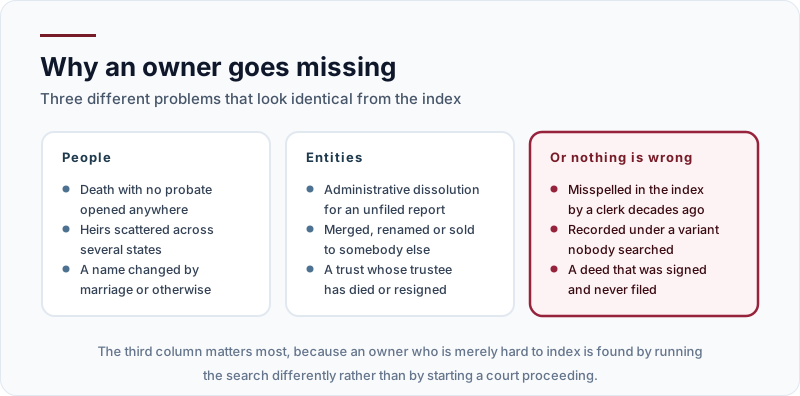
Three quite different situations produce the same appearance, and telling them apart is most of the work.
People stop being findable for ordinary reasons. Somebody dies and no estate is ever opened, so the interest passes by statute to heirs nobody has listed. A family disperses across several states over two generations. A name changes on marriage, or twice.
Entities stop existing. Administrative dissolution for an unfiled annual report is extremely common and nothing about it reaches the land record. Companies merge, rename or sell themselves, and the successor documentation lives with a secretary of state rather than a recorder. A trust can outlive the trustee named in the deed.
Or nothing is actually wrong. The owner is perfectly locatable and the index is hiding them. A clerk misspelled the surname in 1962, the deed was recorded under a variant nobody ran, or a conveyance was signed and never filed at all, which is the mechanism behind a document that never becomes a public record. That third category matters most, because it is solved by searching differently rather than by starting a court proceeding.
Where the answer usually is
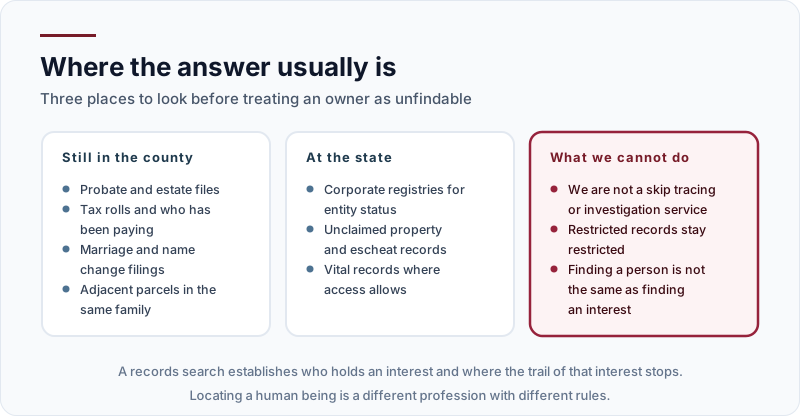
Frequently it is still in the same courthouse, one office over. Probate and estate files name heirs and devisees. Tax rolls show who has actually been paying, which is often the single most informative fact available and is not a title record. Marriage and name change filings resolve the name problem. Adjacent parcels held by the same family produce deeds naming the people you are looking for.
At state level, corporate registries settle whether an entity still exists and what became of it. Unclaimed property and escheat records sometimes hold the trail. Vital records help where access rules allow, and those rules are themselves a restriction question that varies.
What we do not do is worth stating plainly. This is records work, not skip tracing and not investigation. Restricted records stay restricted. Establishing that an interest sits in a named person is a different exercise from locating that person today, and conflating the two leads people to expect something a title search was never going to deliver.
What the search is actually for
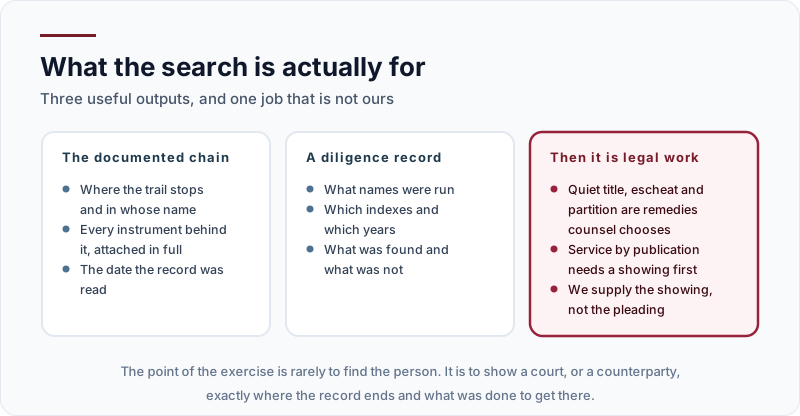
Three outputs, and the third is the one people underestimate.
A documented chain showing exactly where the trail stops and in whose name, with every instrument behind it attached rather than summarized, and the date the record was read.
A diligence record. What names were run, which indexes, which years, what was found and what was not. That sounds like housekeeping and it is not. Where an action ends in service by publication, courts generally want a showing that a diligent search was made first, and a thin showing is a visible weakness in the file.
Then the legal work, which is not ours. Quiet title, escheat proceedings, partition, tax foreclosure and heirship determinations are remedies counsel chooses based on the state and the facts. We supply the showing rather than the pleading, and an empty result means nothing was found in the indexes searched rather than that nobody owns the land.
The takeaway
Start by assuming the owner is findable and the index is the problem, because surprisingly often that is true. Run the variants, read the estate files, look at who pays the tax. If the trail genuinely ends, the valuable thing a search produces is a precise account of where it ended and what was done to get there, which is what every legal route from that point needs. Find the property that runs your search, or tell us what you are trying to establish and we will point you at the right one before anything is ordered.