

· AFX Research, LLC
Reading Handwritten and Archaic Records in a Property Chain
Old deeds were written by hand, copied by hand, and worded for a reader who died two centuries ago. What that means for a search that has to go back that far.
Table of Contents
Go back far enough in any chain of title and the records stop looking like records. The type disappears, the spelling loosens, the measurements are in units nobody uses, and the whole thing was written out longhand by a county clerk copying a document he was holding in his other hand. This is ordinary. It is also the part of the work that decides whether a search that goes back a long way produces an answer or produces a shrug.
What an old instrument looks like
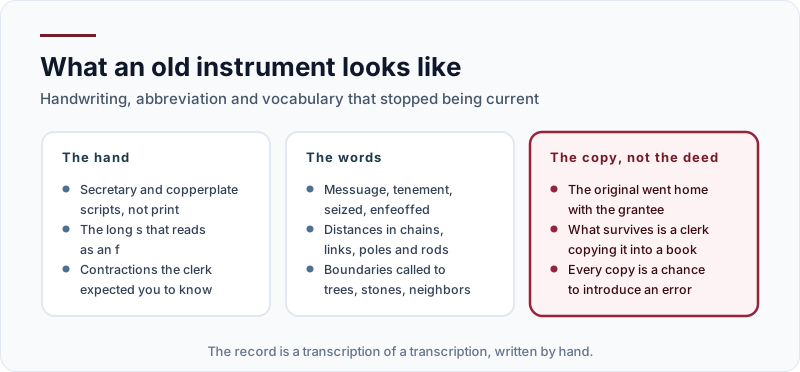
The handwriting is the first obstacle and the smallest one. Secretary hand and copperplate are learnable, the long s that reads as an f stops being confusing after an hour, and the contractions clerks used were conventional enough to be looked up.
The vocabulary takes longer. A messuage is a dwelling with its outbuildings and yard. To be seized of land is to hold it, not to have had it taken. Distances come in chains, links, poles and rods, and a boundary is frequently called not to a bearing but to a white oak, a pile of stones, or the land of a neighbor whose own deed is the only thing that now says where he was.
Then there is the thing most people never think about. The deed you are reading is almost never the deed that was signed. The original went home with the grantee. What the county kept was a clerk’s handwritten transcription of it into a bound book, which means every instrument in an old chain has already survived one act of copying, performed by a person, at speed.
Where the reading goes wrong
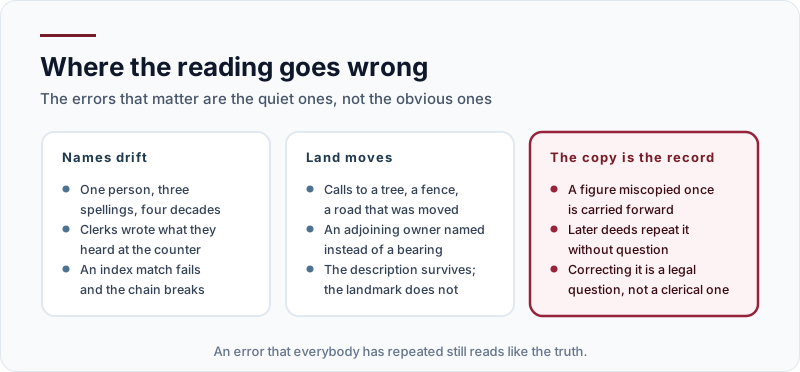
Names drift first. A family recorded as Reilly in 1840 is O’Reilly in 1862 and Riley by 1885, not because anybody changed anything but because clerks wrote down what they heard. An index search on one spelling returns nothing, and nothing looks exactly like a clean result, which is the trap described in what it means when a search finds nothing.
Land descriptions drift second. This is the historical end of the problem set out in how land is identified in the record, where the description survives perfectly while every physical thing it refers to disappears. The oak comes down, the fence line moves, the road is straightened.
And the copy itself can be the error. A clerk transposing a figure creates a discrepancy that later deeds repeat faithfully, because each subsequent drafter worked from the recorded version. After a century of repetition the mistake reads exactly like the truth, and correcting it is a legal question rather than a clerical one.
Why this stays human work
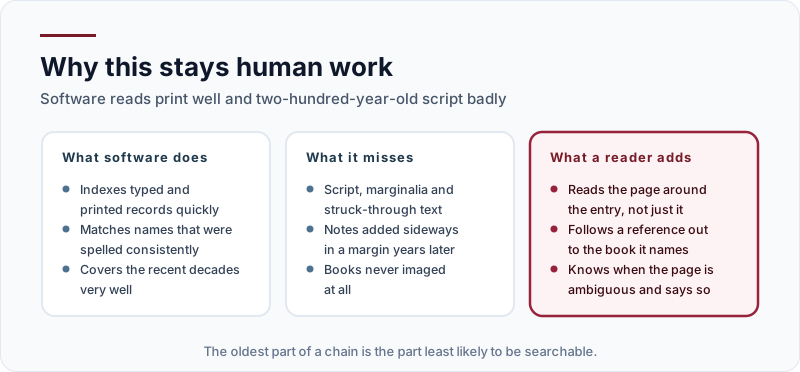
Automated indexing has changed the recent decades enormously and the deep ones very little. Optical recognition handles printed and typed records well, matches names that were spelled consistently, and makes the last fifty years genuinely fast to search. It does poorly with script, and it cannot see a note added sideways in a margin thirty years after the entry it modifies.
Plenty of the oldest books were never imaged at all, which is why the work is still partly physical and why an abstractor still goes to the courthouse. Someone has to read the page around the entry rather than just the entry, follow a reference out to the book it names, and recognize when a page is genuinely ambiguous instead of forcing it into a clean answer.
The takeaway
The oldest part of a chain is the part least likely to be searchable and most likely to be decisive, because everything after it inherits whatever it established. Reading it is a skill, the errors it hides are quiet ones, and no amount of digitization has removed the need for a person who can read the hand. Find the property that runs your search, or tell us how far back you need to go and we will tell you what the records in that county will make possible before anything is ordered.