

· AFX Research, LLC
What Happens to Property Records When a Jurisdiction Changes
Counties split, towns annex, boundaries move. Future filings follow the new office and everything already recorded stays exactly where it was filed.
A chain of title reads cleanly back to 1878 and then simply stops, with no conveyance into the earliest owner and no explanation. Nothing was destroyed and nobody made a mistake. The land was in a different county in 1878, that county still holds the book, and the index you are reading has no reason to mention it. Jurisdictional change is one of the quietest sources of an apparent break in a chain, and it is entirely invisible from inside the record. It sits alongside what happens when the records were destroyed as a reason a chain stops without anything being wrong.
When a jurisdiction changes
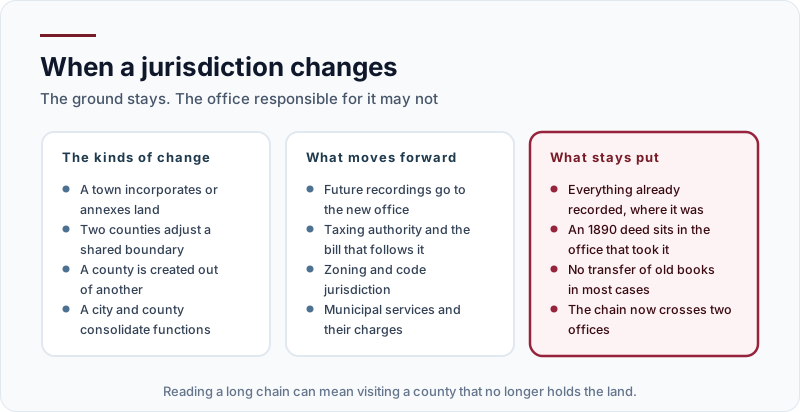
Four kinds of change matter. A town incorporates or annexes unincorporated land. Two counties adjust a shared boundary, usually to follow a river that moved or to settle a survey dispute. A new county is created out of an existing one, which happened constantly through the nineteenth century and still occasionally happens. Or a city and county consolidate, merging offices that were separate.
What moves forward is everything prospective. Future recordings go to the new office. Taxing authority moves, and the bill with it. Zoning and code jurisdiction move. Municipal services and their charges follow.
What stays put is everything already recorded. A deed filed in 1878 sits in the office that accepted it, in the book it was written into, and in most cases nothing is transferred. The result is that a chain reaching back past the change crosses two offices, and only one of them appears in any index a modern searcher is likely to open.
Spotting the handover
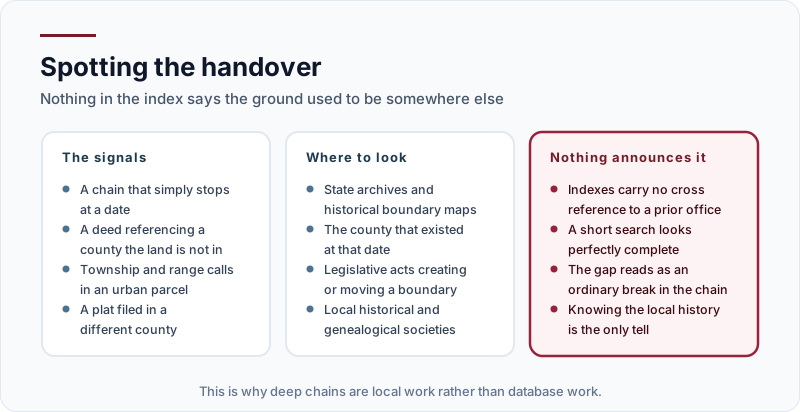
The signals are indirect. A chain that stops at a particular date rather than at a particular transaction. A deed referencing a county the land is not in. Township and range calls in a parcel that is now thoroughly urban. A plat filed somewhere unexpected.
Where to look is a research question rather than a records question. State archives and historical boundary maps establish which county held the ground on a given date. The legislative act creating or moving the boundary is usually findable. Local historical and genealogical societies have frequently done this work already for their own purposes.
What makes it hard is that nothing announces it. Indexes carry no cross reference to a predecessor office, so a search that stops at the change looks complete, and the gap reads exactly like an ordinary break in the chain. Knowing that a boundary moved here, in this decade, is local knowledge, which is one more instance of the point in why recording practice is local.
What it costs you
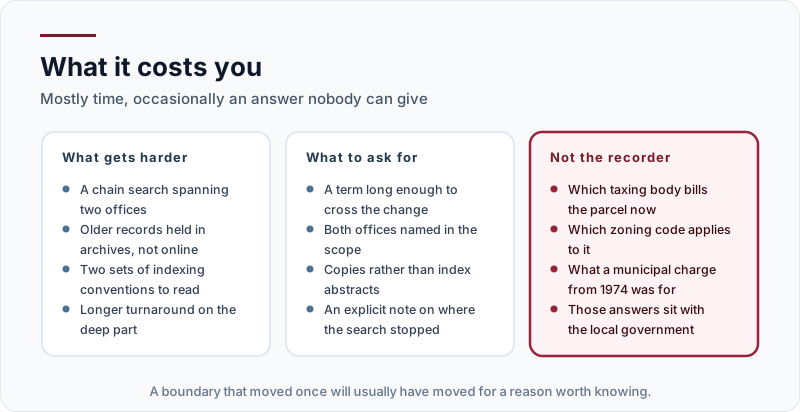
Mostly time. A chain search spanning two offices takes longer. Older records are frequently in archives rather than online. Two sets of indexing conventions have to be read, and they will not match.
What to ask for is straightforward once you know the change exists. A term long enough to cross it. Both offices named in the scope rather than assumed. Copies rather than index abstracts, since the early instruments are where the bridging language lives. And an explicit note on the report saying where the search stopped and why — the disclosure discussed in how a title search is checked.
A few questions never belong to the recorder at all. Which body taxes the parcel now, which zoning code applies, and what a municipal charge from 1974 was actually for. Those sit with the local government, in whichever form it currently takes.
The takeaway
Boundaries move, offices change, and the paper stays where it was filed. A chain that stops cleanly at a date rather than at a transaction is the signal, and the fix is a longer term across two offices rather than a conclusion that the record is broken. Find the property that runs your search, or tell us how far back you need to go and we will tell you what the local history makes possible.