

· AFX Research, LLC
How a Title Search Is Checked Before the Report Goes Out
The failure that matters is not a misread word, it is a correct answer to the wrong question. What a review pass catches, and what no amount of checking can fix.
Table of Contents
Every search report is somebody’s reading of a set of indexes, and readings can be wrong. What is less obvious is that the wrong readings which cause real damage are almost never the ones that look wrong. A transposed digit gets caught. A search performed impeccably in a county that holds only part of the property does not, because there is nothing on the face of it to catch. That is why checking a search is a different exercise from proofreading one, and why it starts with what makes one search take longer than another.
Where a search goes wrong
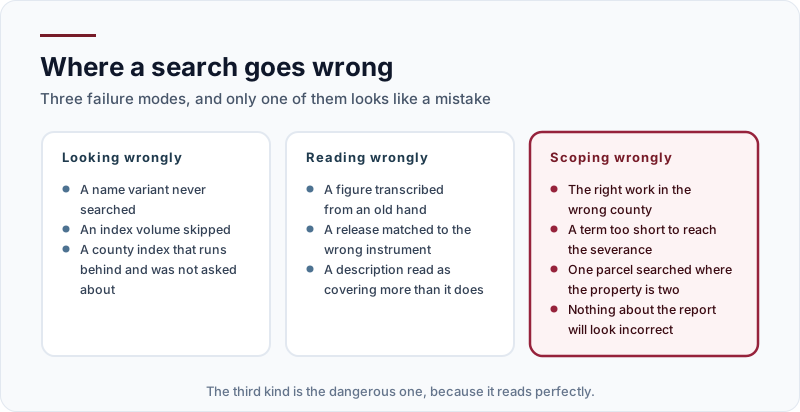
Three failure modes, and they are not equally visible.
Looking wrongly means something was not searched. A name variant nobody tried. An index volume skipped. A county running weeks behind on its indexing that nobody thought to ask about.
Reading wrongly means something was misinterpreted. A figure transcribed out of an old hand, a release matched to the wrong instrument, a legal description read as covering more ground than it does. These are the errors people picture, and they are the least dangerous, because a second reader finds them.
Scoping wrongly is the one that matters. The right work done in the wrong county. A term too short to reach the severance that decides the question. One parcel searched where the property is two, which is the situation in when a property sits across a county line. Nothing about the resulting report looks incorrect, because nothing in it is incorrect.
What a second pass catches
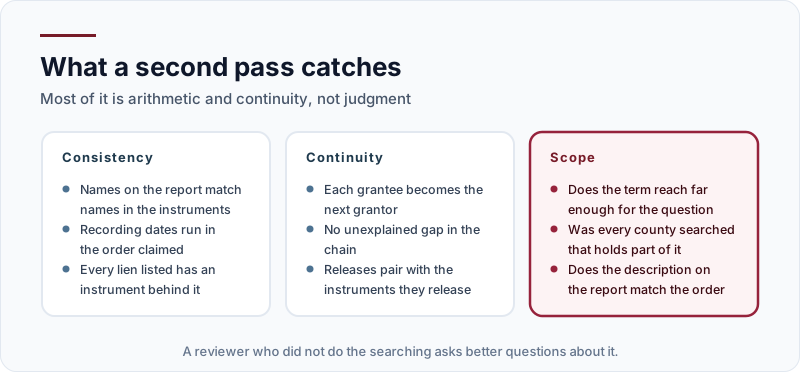
Most of the review is mechanical, and that is a virtue rather than a limitation.
Consistency. Do the names on the report match the names in the instruments behind it. Do the recording dates run in the order the chain claims. Does every lien listed have an actual instrument supporting it.
Continuity. Does each grantee become the next grantor, without an unexplained gap. Do the releases pair with the instruments they purport to release. This is where a break in the chain surfaces, and where the analysis in why two searches can return different answers usually begins.
Scope. Does the term reach far enough for the question actually asked. Was every county searched that holds part of the land. Does the description on the report match the description on the order. A reviewer who did not perform the search asks these better than the person who did, for the ordinary reason that the searcher has already decided what the job was. Once you have spent two hours in the grantor index for Washington County, the possibility that the answer lies in Benton County has stopped being available to you.
There is a fourth check that is less formal and harder to describe. An experienced reviewer reads a chain the way a proofreader reads a sentence, noticing the places where it does not sound right. A conveyance for a dollar between parties with the same surname. Three transfers in six weeks after twenty quiet years. A mortgage substantially larger than the property could plausibly support. None of those is an error, and each is a reason to look at the underlying instrument rather than the index line.
What review cannot fix
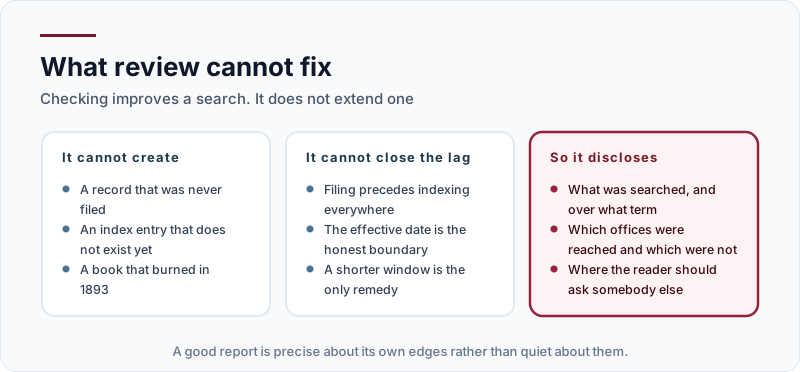
Checking improves a search. It does not extend one, and the distinction is worth being clear about.
No review creates a record that was never filed, an index entry that has not been keyed yet, or a book that burned in 1893. No review closes the gap between filing and indexing, which exists in every recording office in the country and is the reason a report carries an effective date rather than a promise about today.
What review does instead is make the report honest about its own edges. What was searched, over what term, in which offices. Which questions were reached and which sit with somebody else. A report that states its boundaries precisely is more useful than one that states its conclusions confidently, because the reader can then see what is still open.
The takeaway
Reviewing a search is mostly arithmetic and continuity, done by someone who did not do the original work, and its real value is the scope question rather than the spelling. The errors that cost people money are correct answers to questions nobody meant to ask. Find the property that runs your search, or tell us what you need to establish and we will make sure the scope matches the question before anything is ordered.