

· AFX Research, LLC
What the Public Record Cannot Lawfully Be Used For, and Why
Reading a filed instrument is open to anybody. Making certain decisions about a person from it is governed by statutes that have nothing to do with property law.
Table of Contents
The land record is open because a notice system that strangers could not read would give notice to nobody. That settles whether you may look, and it settles nothing at all about what you may then do. A separate body of law governs certain uses of information about people, it applies regardless of how lawfully the information was obtained, and nobody at the recorder’s counter is going to mention it. This is the other half of the question in can you order a search on property you do not own.
Open to read, regulated to use
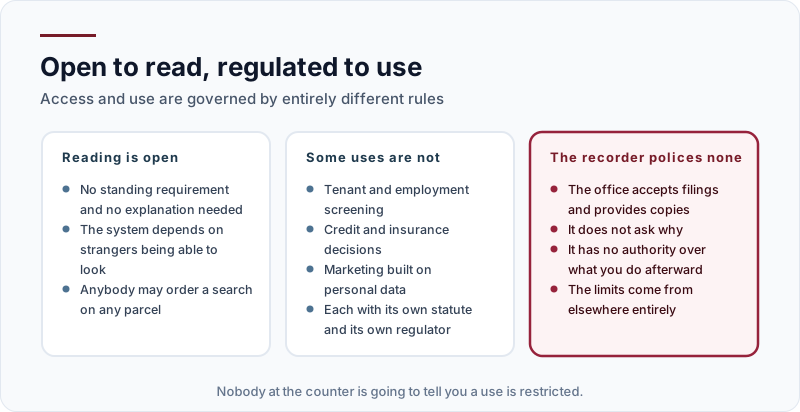
Reading is open. There is no standing requirement, no explanation owed to anybody, and no restriction on who may order a search on which parcel. The whole mechanism depends on that.
Some uses are not open in the same way. Tenant and employment screening. Credit and insurance decisions. Marketing built on personal data. Each of those carries its own statute, its own regulator and its own obligations, and each applies to what you do rather than to what you read.
The recorder polices none of it. The office accepts filings and provides copies, it does not ask why, and it has no authority over anything that happens afterward. The limits come from somewhere else entirely, which is exactly why they catch people out.
Where the limits come from
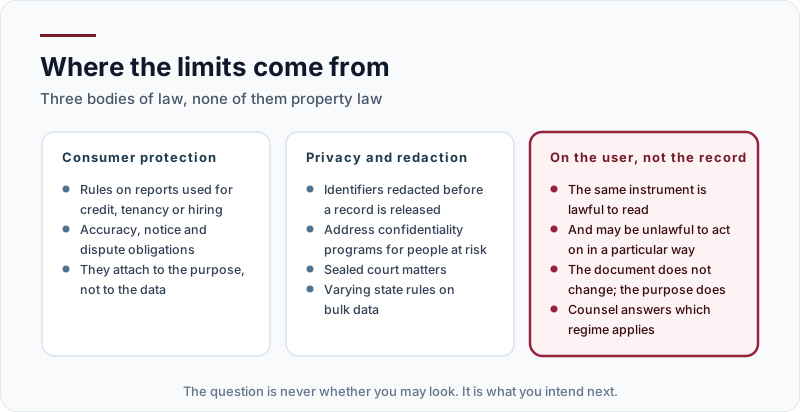
Three bodies of law, none of them property law.
Consumer protection rules govern reports assembled and used for credit, tenancy, insurance or employment decisions, and they impose accuracy, notice and dispute obligations. They attach to the purpose of the report rather than to the underlying documents.
Privacy and redaction rules operate upstream. Personal identifiers are redacted before release in most offices. Address confidentiality programs shield people at risk. Sealed matters stay sealed. And states differ considerably on bulk access to record data, which is the fastest-moving part of this area. The categories themselves are set out in what is restricted in the public record.
The point that matters is where the obligation sits. The same instrument is lawful to read and may be unlawful to act on in a particular way. The document does not change. The purpose does, and the purpose is what the statute cares about.
Why this is getting more rather than less complicated
Because the record is now easy to obtain in bulk, and the statutes were written when it was not.
A clerk handing over one deed to one visitor raised no question anybody needed a rule for. A system that can deliver several million records to a server raises several. States have responded unevenly, some restricting bulk access, some charging for it, some redacting more aggressively than they did ten years ago, and the direction of travel is clear even where the detail is not.
That matters to anybody building something on record data rather than simply reading it, and the practical consequence is that a use which was unremarkable in one state may require a different arrangement in the next. The variation is the same local variation described in why recording practice is local, extended into data policy.
What it means in practice
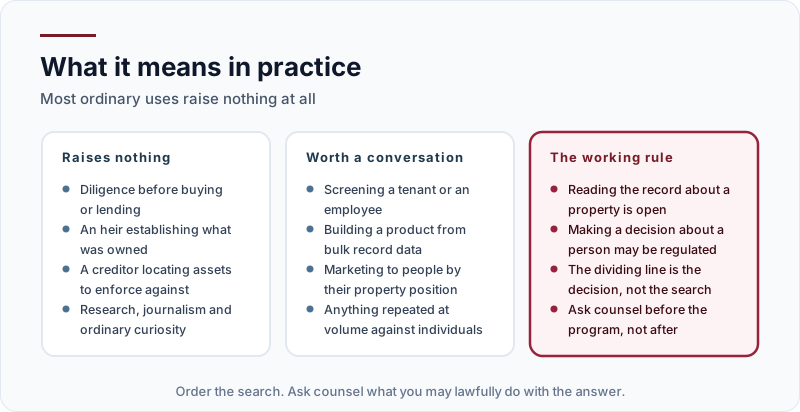
Most ordinary uses raise nothing whatever. Diligence before buying or lending. An heir establishing what a relative held. A creditor locating assets to enforce a judgment against. Research, journalism and ordinary curiosity about a neighborhood.
A smaller set is worth a conversation with counsel before rather than after. Screening a tenant or an employee. Building a product from bulk record data. Marketing to people based on their property position. Anything done repeatedly, at volume, against individuals.
The working rule is simple enough to hold in your head. Reading the record about a property is open. Making a decision about a person may be regulated. The dividing line is the decision rather than the search, which is why the same search can be entirely unremarkable in one hand and a compliance question in another.
The takeaway
Access and use are governed separately, the recorder enforces neither, and the statutes that matter sit outside property law altogether. Order the search freely and ask counsel what you may lawfully do with the answer when the answer is going to decide something about a person. Find the property that runs your search, or tell us what you are trying to establish and we will point you at the right scope before anything is ordered.