

· AFX Research, LLC
What Happens When One Property Sits Across a County Line
Two courthouses, two indexes, and neither one knows about the other half. Why a perfectly accurate search can cover part of a property, and how to spot it first.
Table of Contents
A search comes back clean, correctly performed, properly indexed, and covering sixty percent of the land. Nothing about the report looks wrong because nothing about it is wrong. It answered the question it was asked in the county it was asked about, and the rest of the property is in the next county, where nobody looked. This is the quietest failure in the field and it follows directly from the fact that recording practice is local.
One parcel, two courthouses
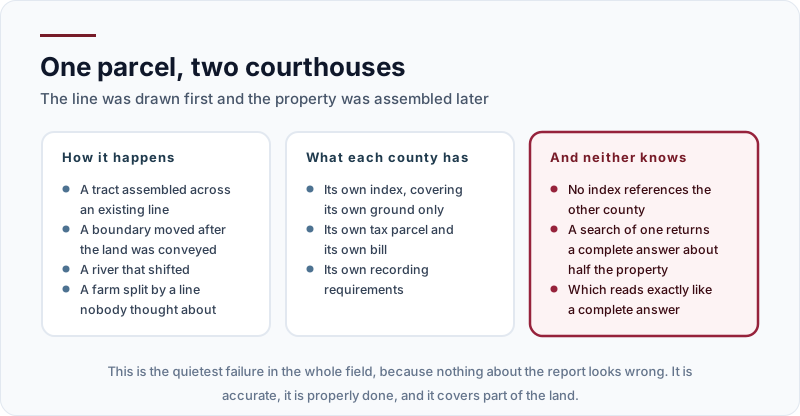
It happens more often than people expect, and always for ordinary reasons. A tract was assembled across a line that already existed. A boundary was moved after the land was conveyed. A river that formed the boundary shifted. A farm was laid out by somebody who cared about the creek and not about the county.
Each county holds its own index, covering its own ground and nothing else. Each assigns its own parcel identifier and sends its own tax bill. Each has its own recording requirements and its own quirks.
And neither index references the other. There is no flag, no cross-reference and no mechanism that would produce one. A search of one county returns a complete and accurate answer about part of the property, and a complete accurate answer about part of something reads exactly like a complete answer.
What has to happen twice
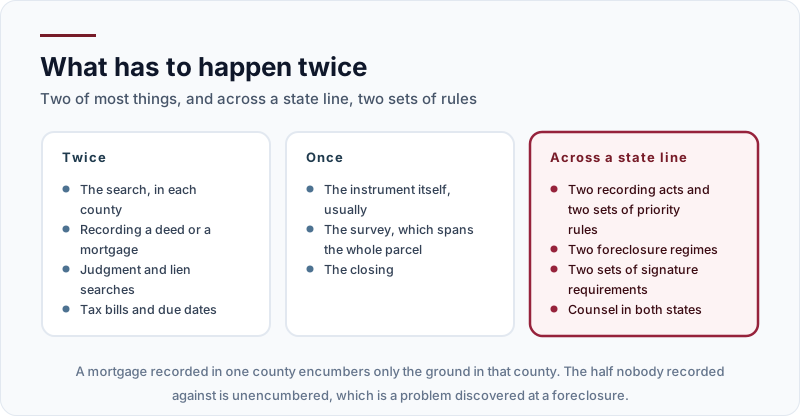
Most things double. The search, in each county. Recording a deed or a mortgage, which has to be done in both if it is to encumber both. Judgment and lien searches, since a judgment is indexed where it was docketed. Tax bills, with their own due dates and their own delinquency clocks.
A few things do not. The instrument itself is usually one document recorded twice. The survey spans the whole parcel. The closing happens once.
The consequence of getting the recording half wrong is severe and specific. A mortgage recorded in one county encumbers only the ground lying in that county. The half nobody recorded against is unencumbered, and that is a fact people discover at a foreclosure rather than at a closing.
Across a state line it goes further, because the law itself changes. Two recording acts, two sets of priority rules, two foreclosure regimes and two sets of signature requirements, which is exactly the problem in how state law changes the answer. Counsel in both states, not one.
One further wrinkle is worth knowing. Where a boundary itself has moved, historical instruments may sit in a county that no longer contains the land at all. A deed from 1890 filed in the county that then held the ground stays where it was filed, so reading the chain back far enough can mean visiting an office with no present connection to the property. That is the same problem described in what happens when the records were destroyed, arriving from a different direction.
Spotting it and scoping it
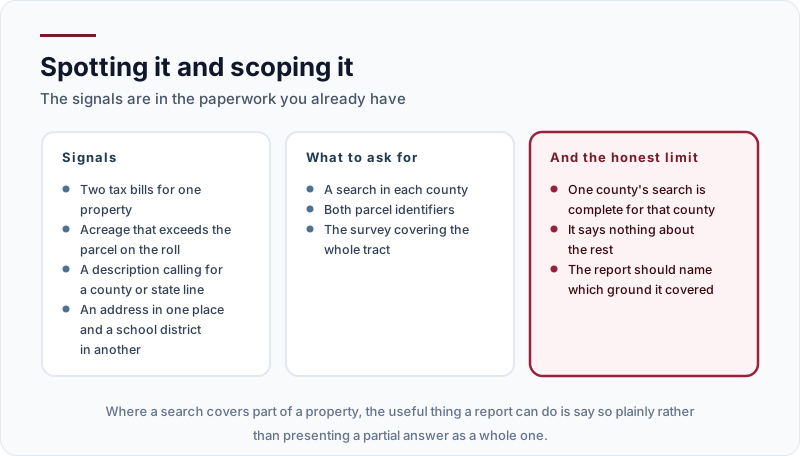
The signals are usually already in the paperwork. Two tax bills for what everybody calls one property. Deeded acreage that exceeds the acreage on the tax roll. A description that calls for a county or a state line as a boundary. An address in one jurisdiction and a school district or a fire district in another.
What to ask for is then straightforward. A search in each county, both parcel identifiers, and a survey covering the whole tract rather than the piece somebody happened to measure.
And the limit belongs in the report. A search of one county is complete for that county and says nothing at all about the rest. Where a search covers part of a property, the useful thing a report can do is name which ground it actually covered rather than presenting a partial answer as a whole one.
The takeaway
Before ordering anything, establish how many counties the property is in, because that is a scoping question and not a detail. Count the tax bills, read the deeded acreage against the roll, and look for a boundary call in the description. Two counties means two searches and two recordings, and across a state line it also means two sets of rules. Find the property that runs your search, or tell us what you are trying to establish and we will point you at the right one before anything is ordered.