

· AFX Research, LLC
What a Search Does When the Owner Is a Company, Not a Person
An entity name is a string that drifts, and the facts about it sit in a different office. What changes about a search when a company holds the property.
Table of Contents
Searching a person is mostly a matter of names and dates. Searching a company is a different exercise, because a company’s name is not a fixed thing, the facts about it are kept somewhere other than the recorder, and the question of who was entitled to sign a deed on its behalf has no answer in the land records at all. None of that makes the search harder to do. It makes it easier to do incompletely, which is the point worth understanding before ordering one. It extends what a search tells you about a person into territory that behaves differently.
Why an entity is harder to search
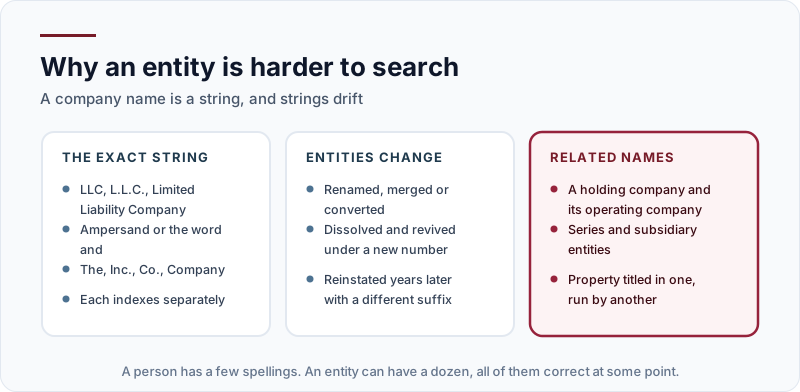
An index sorts on the characters that were typed into it. LLC, L.L.C., and Limited Liability Company are three different strings. So are an ampersand and the word and, a leading The and no leading The, Inc. and Incorporated. All of them are the same company and none of them index together.
Then entities change in ways people do not. They get renamed, merged into another, converted from one form to another, dissolved and revived years later under a different registration. Each of those events can leave property standing in a name the current entity no longer uses.
And companies travel in groups. A holding company owns the land while an operating company runs the business on it, or a developer uses a separate entity for each phase of a subdivision. Property titled in one and managed by another is ordinary, and a search run on the name somebody gave you may simply be the wrong member of the family. Where two entities both appear to claim, the problem turns into the one described in what happens when two recorded documents claim the same land.
Where the entity facts live
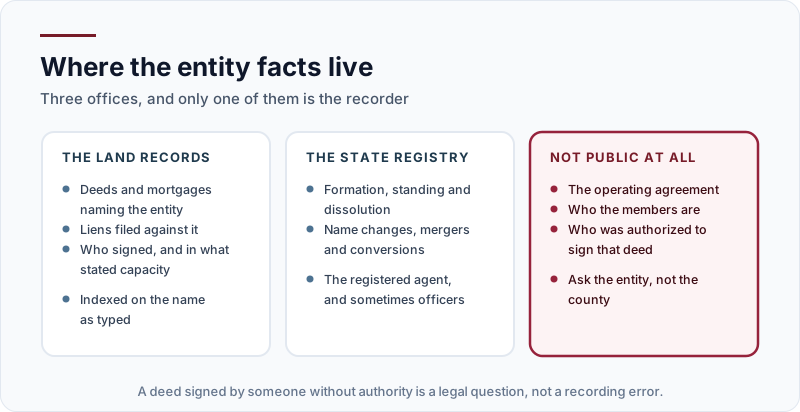
The land records hold deeds and mortgages naming the entity, liens filed against it, and the signature block showing who signed and in what stated capacity. All of it indexed on the name exactly as typed, which is why a search against the right company under the wrong suffix can come back empty.
The state business registry holds everything else that is public. Formation, standing, dissolution, name changes, mergers and conversions, the registered agent, and in some states the officers or managers. That is a separate search in a separate system, and it is what connects an old name to a current one.
What is not public anywhere is the inside of the company. The operating agreement, who the members are, and whether the person who signed that deed was actually authorized to. A deed signed by somebody without authority is a legal problem rather than a recording error, and nothing in either office will flag it.
Scoping a search on an entity
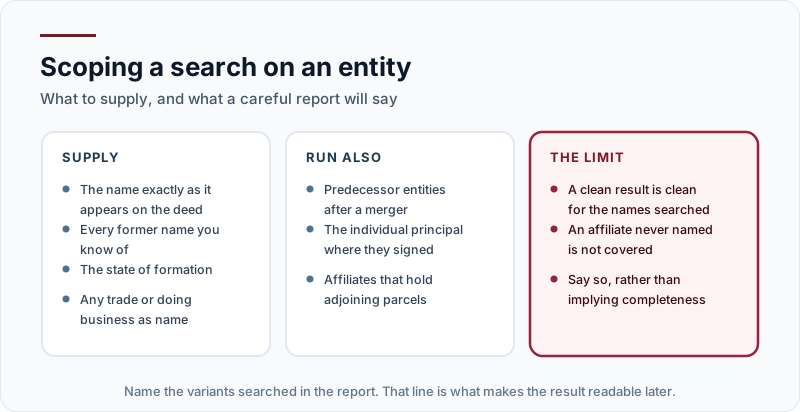
Supply the name exactly as it appears on the deed, every former name you know of, the state of formation, and any trade name the business uses. Then think about who else is worth running. Predecessor entities after a merger, the individual principal where they signed in their own name, and affiliates holding adjoining parcels are all worth a line each, and none of them costs much to add at the start.
Then read the limit in the report. A clean result is clean for the names that were searched, and an affiliate nobody named was never covered. A careful report says which variants were run rather than implying it looked everywhere, which is the same discipline described in who a report is addressed to and why it matters.
The takeaway
When a company holds the property, the search becomes a names exercise before it becomes a records exercise. Collect every form of the name and every related entity you can, expect the business registry to be a second search, and read the scope line to see which names were actually run. Find the property that runs your search, or tell us what you are trying to establish and we will point you at the right one before anything is ordered.