

· AFX Research, LLC
What a Property Search Tells You About a Person, and What It Does Not
A name search returns instruments filed under a string of characters in one county. What that genuinely establishes, where it fails, and what people over-read into it.
Table of Contents
Most searches are about a parcel. A meaningful minority are about a person — an heir working out what a relative held, a creditor looking for something to enforce against, a buyer checking who they are dealing with. Those searches work, they are entirely lawful, and they are read with far more confidence than the method supports. A name search returns instruments filed under a string of characters, in the counties you asked about, over the term you paid for. Everything beyond that is inference. The access question itself is settled in can you order a search on property you do not own.
What a name search returns
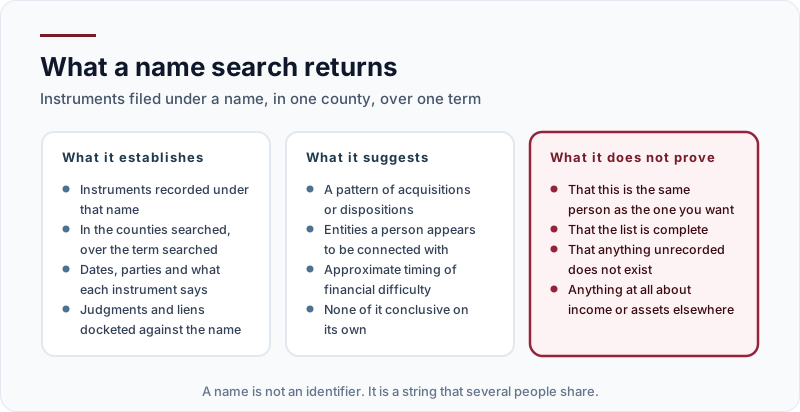
What it establishes is narrow and solid. Instruments recorded under that name, in the counties searched, over the term searched, with their dates and parties and whatever each one says. Judgments and liens docketed against the name.
What it suggests is softer. A pattern of acquisitions or dispositions. Entities the person appears to be connected with. The approximate timing of financial difficulty, visible as a cluster of liens. None of that is conclusive standing alone.
What it does not prove is the part people skip. That this is the same person you are interested in. That the list is complete. That nothing unrecorded exists. And nothing whatever about income, accounts or anything held outside the counties searched.
Where a name search fails
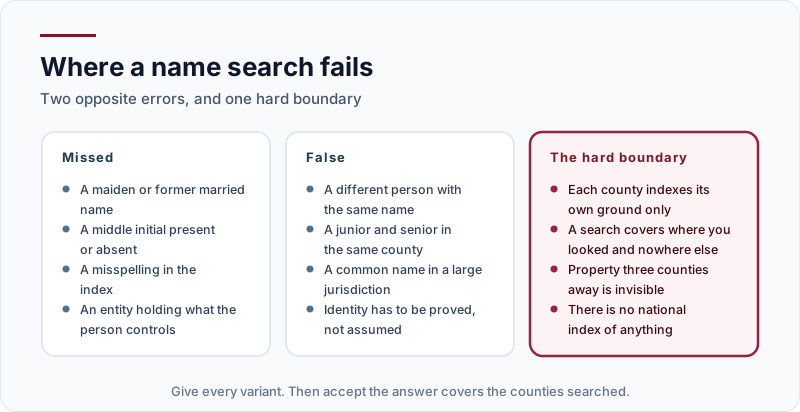
It fails in two opposite directions at once.
Missed. A maiden or former married name. A middle initial present in one filing and absent in another. A misspelling introduced at the counter or during a digitization project, which is the problem in what happens when a recording office digitizes. An entity holding what the person actually controls.
False. A different person with the same name. A junior and a senior in the same county. A common surname in a large jurisdiction, where a search returns dozens of hits belonging to strangers. Identity has to be proved from the instruments rather than assumed from the index.
And one boundary nothing gets around. Each county indexes its own ground and nothing else. A search covers where you looked, property three counties away is invisible, and there is no national index of real property anywhere in the United States.
Why the entity problem is the hardest one
Because it is invisible from the inside. A person who holds real estate through a limited liability company appears in the land record only if somebody searches the company, and the company name is frequently nothing like the person’s.
That is not evasion in most cases. It is ordinary practice for anybody who owns rental property, and it means a name search on an individual can return an entirely accurate empty result about somebody who holds eleven parcels. Working outward from a person to their entities is a corporate records exercise rather than a land records one, and the two have to be run together to produce a useful picture.
Scoping a person question
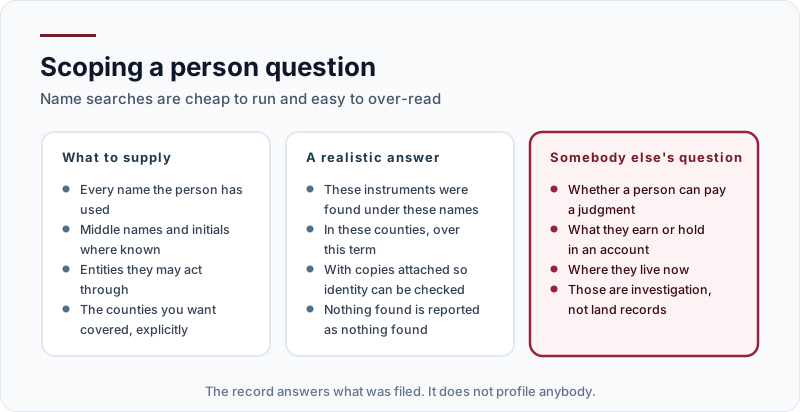
Supply every name the person has used, middle names and initials where known, any entities they may act through, and the counties you want covered, stated explicitly rather than left to be guessed.
A realistic answer says these instruments were found under these names, in these counties, over this term, with copies attached so identity can be checked against the documents. Where nothing was found, it says nothing was found, which is a report about the search rather than a statement about the person — the distinction in what it means when a search finds nothing.
Several related questions belong to somebody else entirely. Whether a person can satisfy a judgment, what they earn, what sits in an account, where they live now. Those are investigation rather than land records, and no amount of searching deeds will produce them.
The takeaway
A name search is a good tool read modestly. It tells you what was filed under a string of characters in the places you looked, and the two ways it fails are opposite and both common. Give every variant, name the counties, and check identity against the instruments rather than the index. Find the property that runs your search, or tell us what you are trying to establish and we will scope it before anything is ordered.